
BuzzFeed pitch deck (2008)
BuzzFeed's January 2008 pitch deck helped Jonah Peretti raise $3.5M in Series A funding, before viral listicles defined digital media. The 21-slide deck skips a classic problem slide and opens with traction: 700K monthly uniques, 2.5M page views, and a patent-pending buzz-detection engine. Note the platform thinking, native advertising, and how to sell technology to investors who only knew publishers.
What founders can steal from BuzzFeed's deck
- Lead with traction when you have it. Peretti opens slide 2 with 700K UVs and 30M widget impressions, not a problem statement.
- Spend slides proving you're a tech platform, not a blog, seven product slides on algorithms, widgets, and optimization dashboards.
- Show monetization as content, not banners. Google and YouTube precedents make native ads feel inevitable.
- Use a simple Venn diagram for competition, media aggregators on one side, ad tech on the other, BuzzFeed in the overlap.
- Name real advisors and a specific hire plan. Duncan Watts, Kenneth Lerer, and headcount targets signal you can execute.
Historical round profile
- Stage
- Series A
- Year
- 2008
- Outcome / Raise
- $3.5M Series A (2008)
- Business model
- Digital media with native advertising
- HQ
- New York, New York
Slide-by-slide breakdown (21 slides)
Every slide in BuzzFeed's 2008 presentation, what job it performs in the room, and how to adapt the sequence for your own deck.
Cover
BuzzFeed. What's Buzzing on the Web?
Why it works
One question, not a tagline soup. The cover frames the company as a discovery layer for the entire internet, not a niche blog.
Where We Are
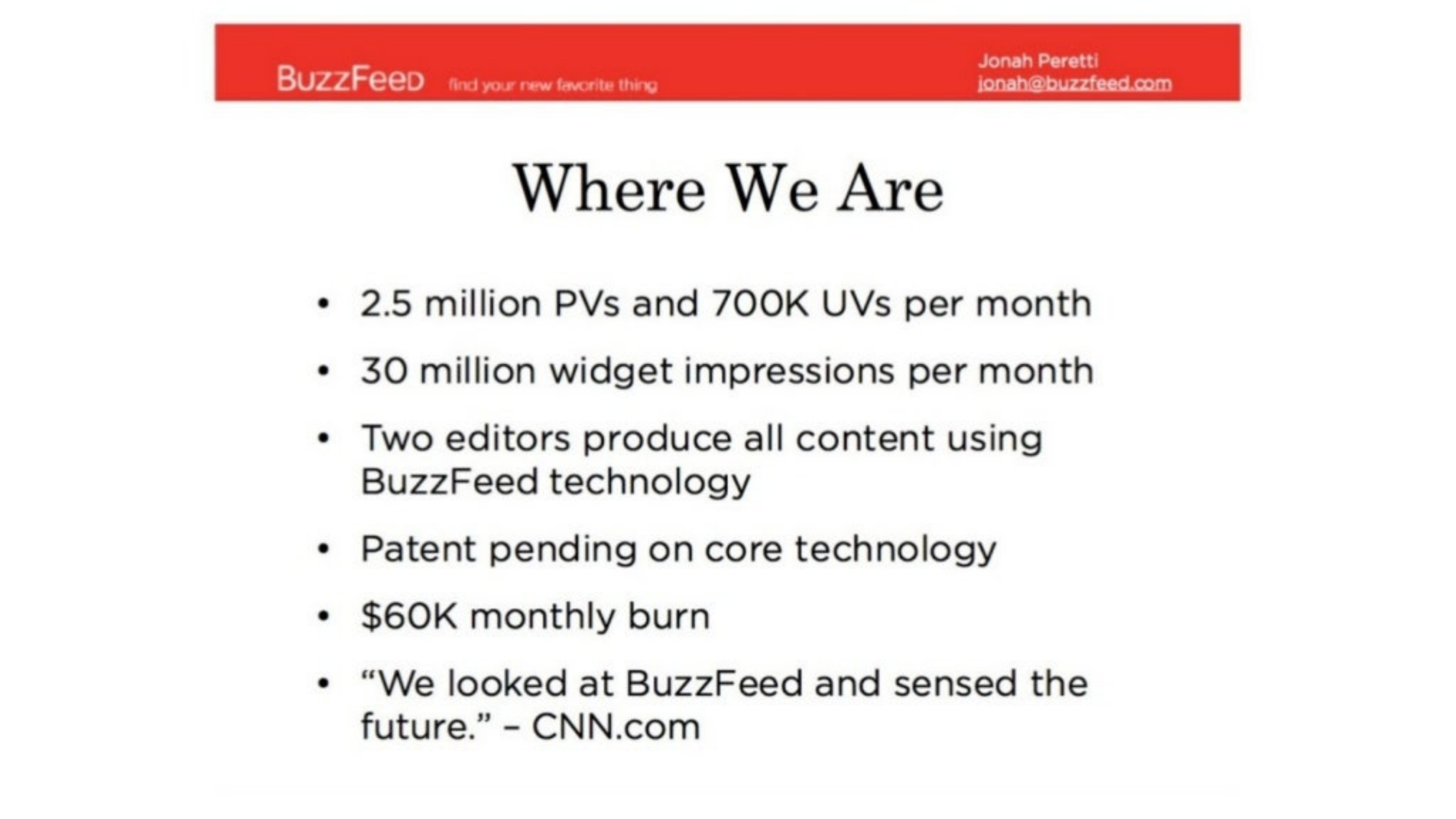
2.5M page views and 700K uniques per month, 30M widget impressions, two editors on BuzzFeed tech, patent pending, $60K monthly burn, plus a CNN.com quote.
Why it works
Traction before thesis. Peretti assumes investors want proof the engine works. Efficiency metrics (two editors, low burn) make the model feel scalable.
Where We're Headed
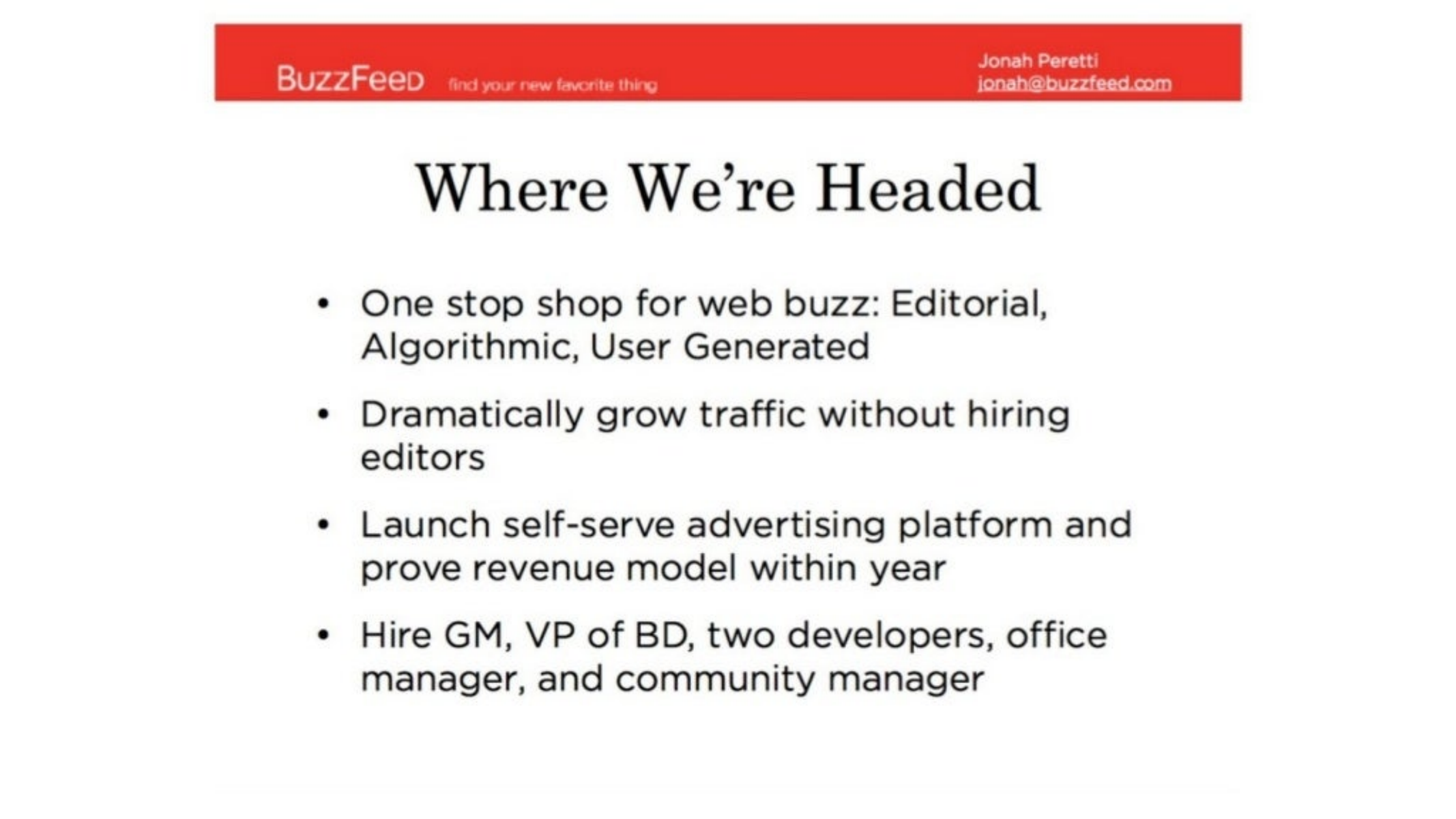
One-stop shop for editorial, algorithmic, and user-generated buzz; grow traffic without hiring editors; launch self-serve ads within a year; hire GM, VP BD, devs, and community staff.
Why it works
Roadmap ties product expansion directly to revenue and headcount. Investors see where the raise goes before the deep product section.
Editorial Content
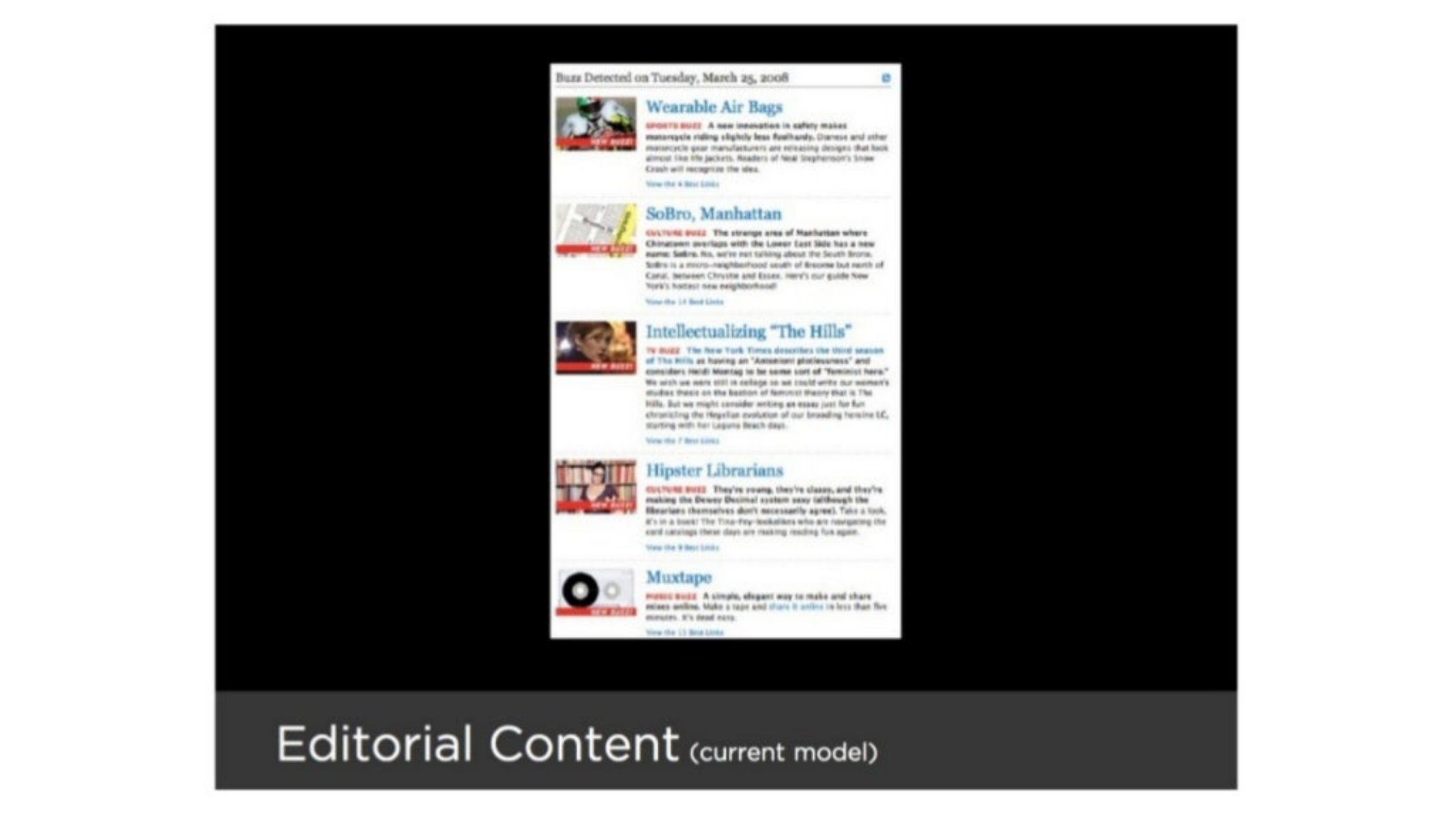
Screenshot of BuzzFeed.com from March 2008, curated "buzz" posts across Sports, Culture, TV, and Music with "View the X Best Links" CTAs.
Why it works
Shows the live product, not a mockup. Category tags and link aggregation prove editorial was already shipping daily.
Algorithmic Content
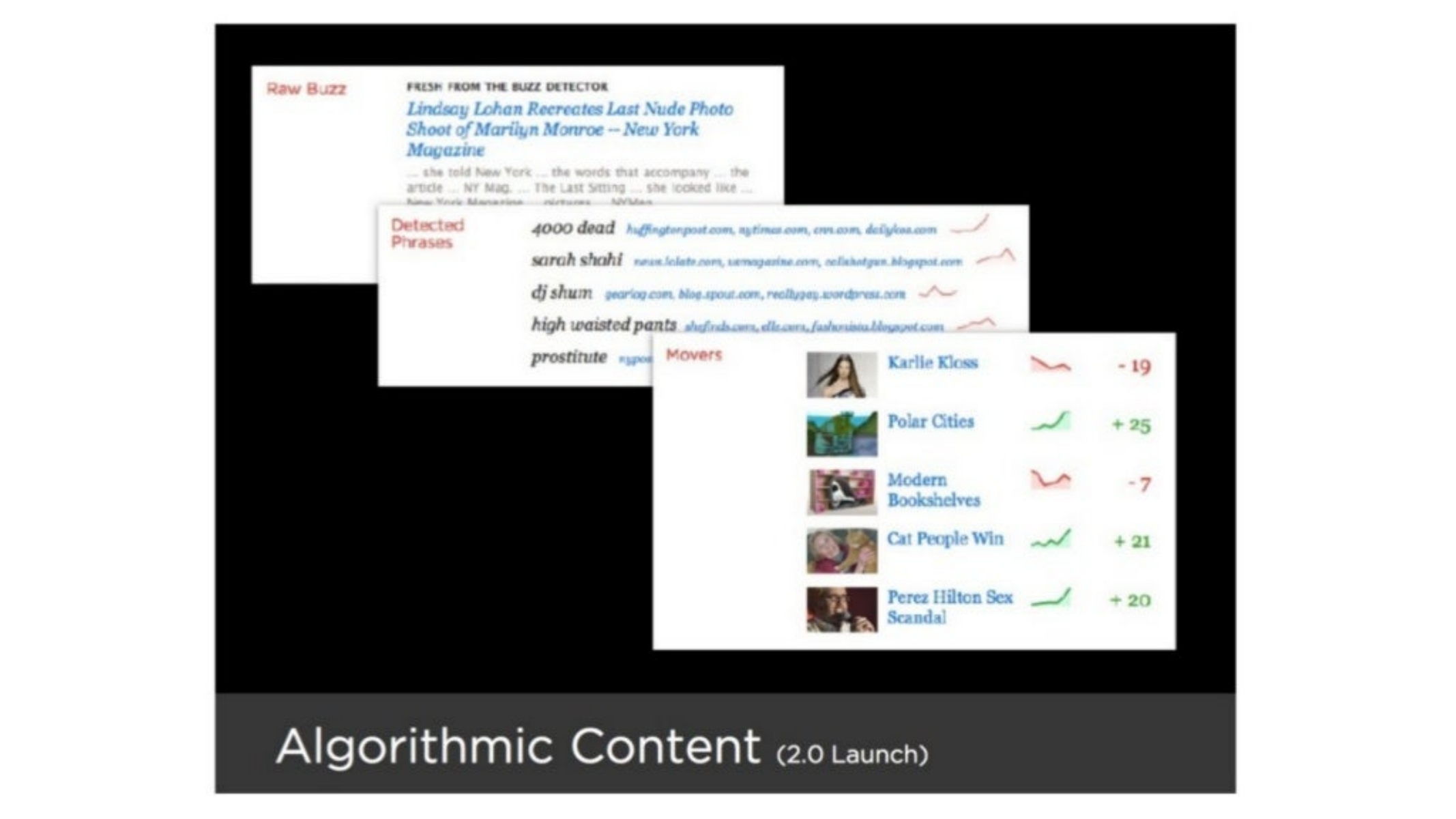
Buzz detector UI: raw buzz feeds, detected phrases with trend arrows, and "Movers" ranked by momentum.
Why it works
This is the defensibility slide, proprietary trend detection, not human curation alone. Sparklines and domain lists make the tech tangible.
User Generated Content
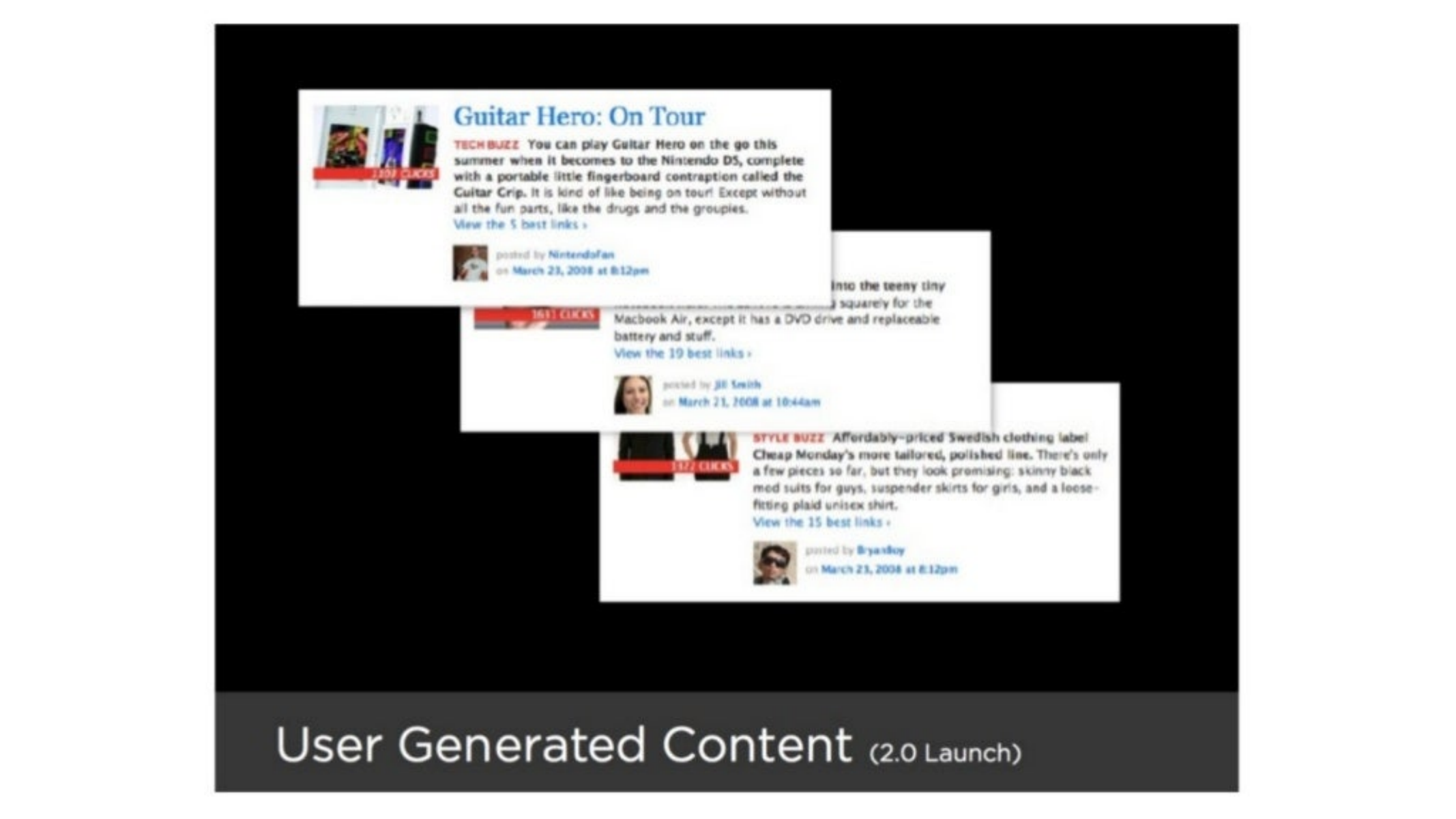
Community posts from Nintendofan, Jill Smith, and BryanBoy with click counts (1,300–1,800+) and timestamps from March 2008.
Why it works
Real users, real metrics, real dates. UGC proves the platform could scale supply beyond two staff editors.
New Front Page
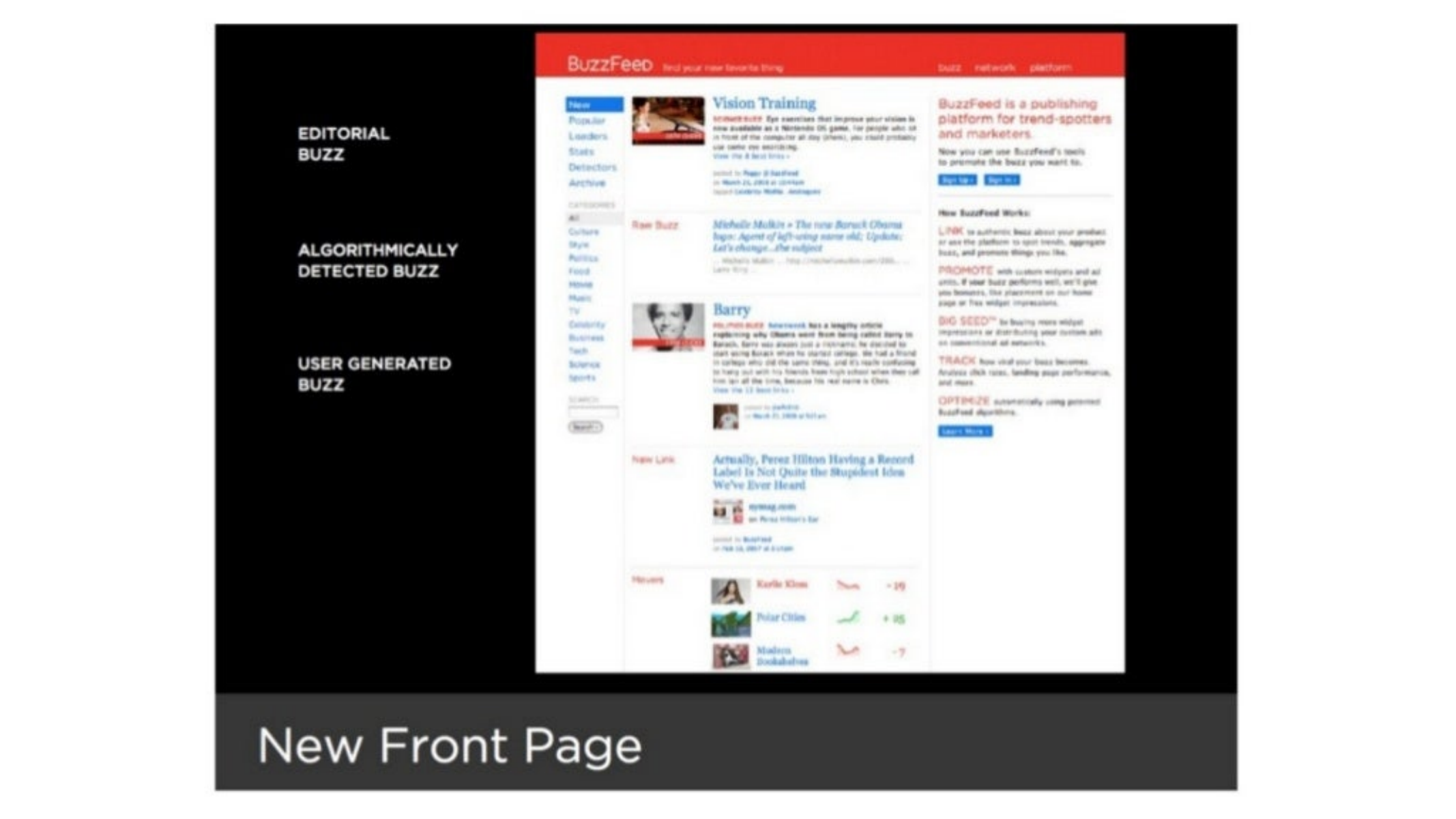
Redesigned homepage blending editorial, algorithmic, and user-generated buzz, plus a marketer sidebar explaining Link, Promote, Big Seed, Track, and Optimize.
Why it works
Dual-audience design in one screenshot: readers get discovery, advertisers get a five-step workflow. Platform, not publisher.
The Platform for Web Buzz
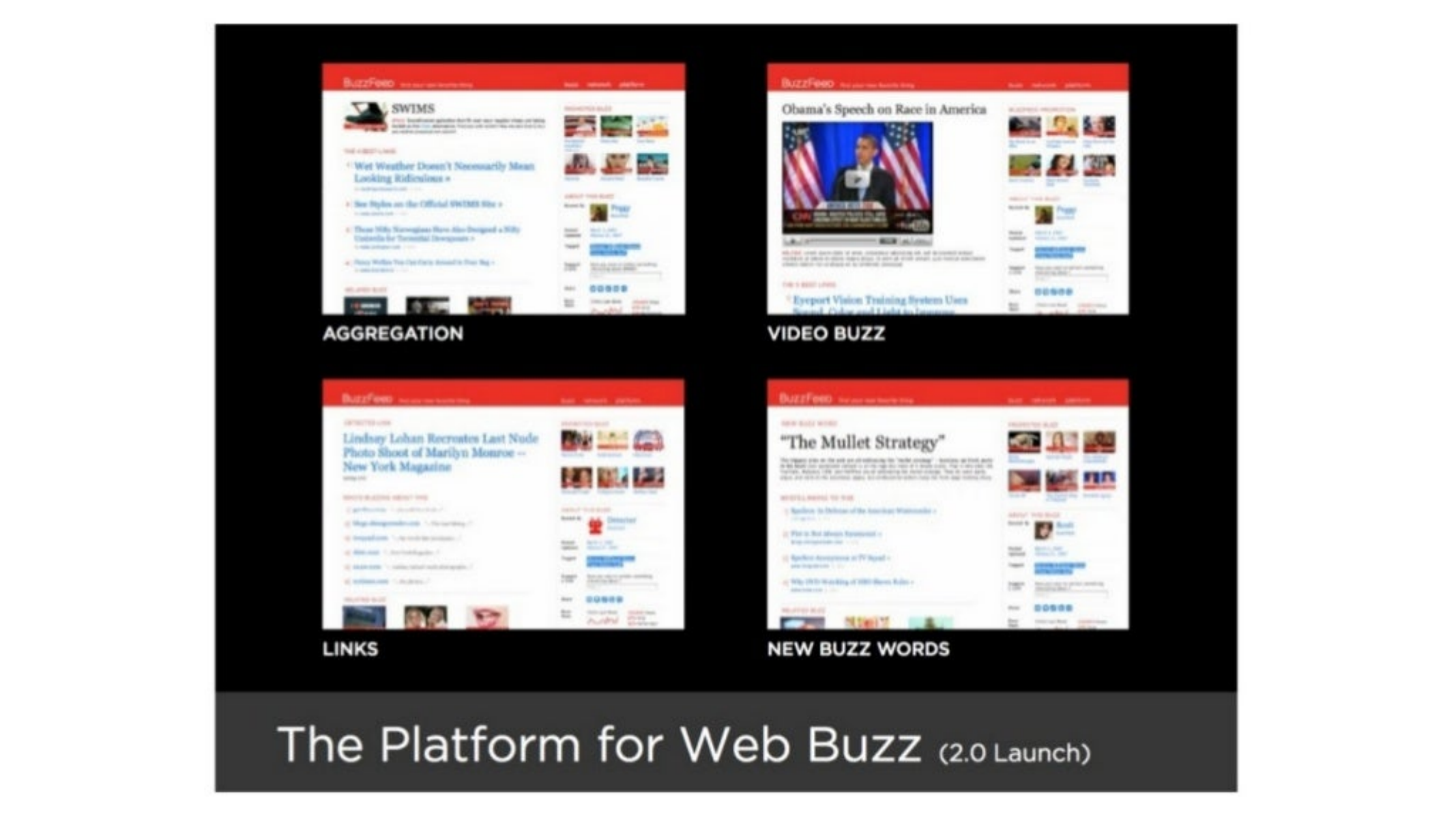
Four product modes. Aggregation, Video Buzz, Links, and New Buzz Words, each with live UI screenshots.
Why it works
Modular product story: same engine powers video, link roundups, and phrase tracking. Shows breadth without separate deck sections.
The Web App
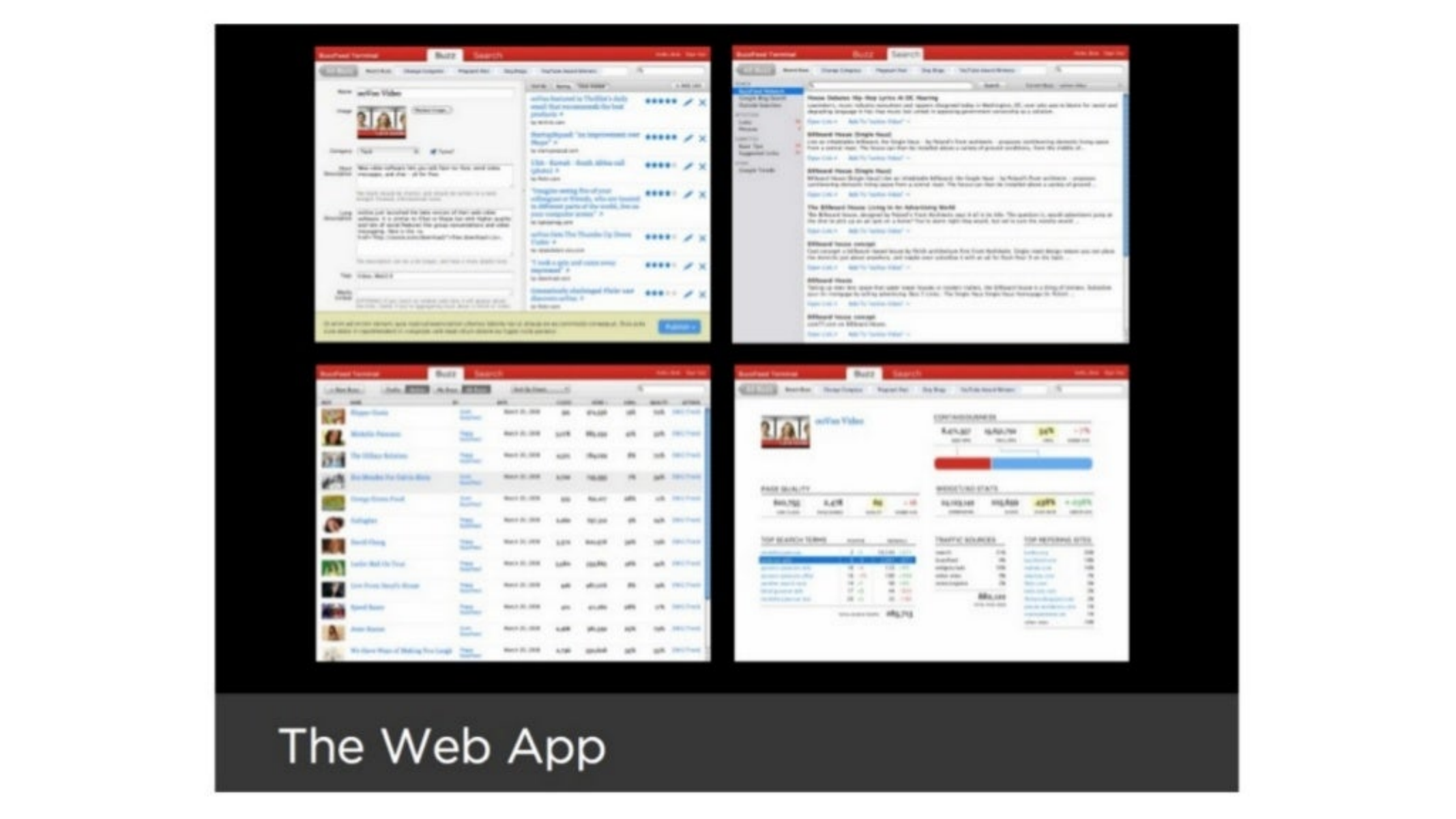
BuzzFeed Terminal screenshots: content editor, buzz search, user directory, and analytics dashboard for a single post.
Why it works
Internal tooling as investor proof. Editors and marketers share one terminal, ops efficiency investors can underwrite.
Optimization
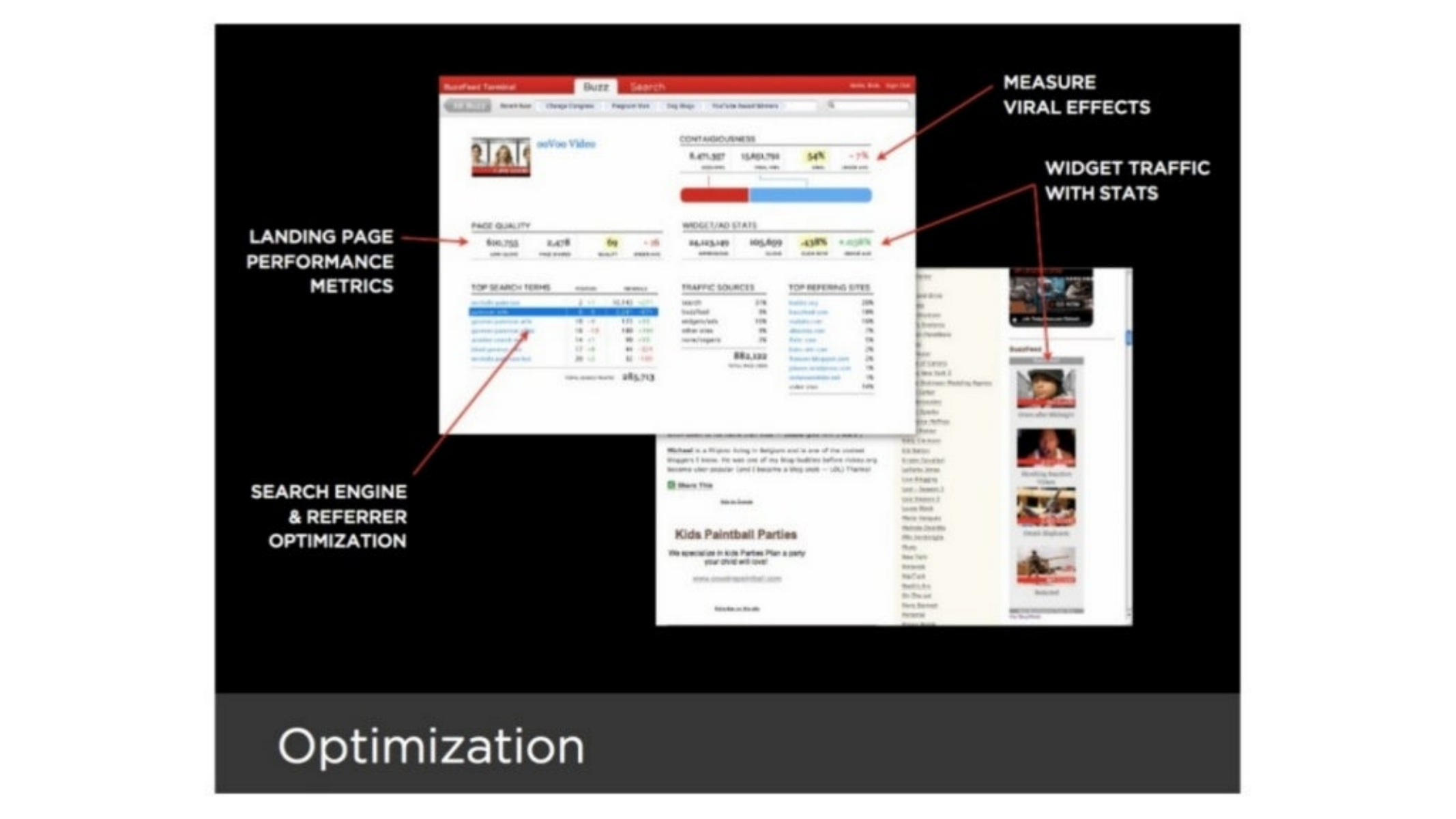
BuzzFeed Terminal metrics for contagiousness, landing-page quality, widget traffic, top search terms, and referrer breakdown (Reddit, Digg, Facebook).
Why it works
Data flywheel slide, measure viral effects, optimize search and referrers, tune widgets. Positions BuzzFeed closer to ad tech than media.
Leaderboard
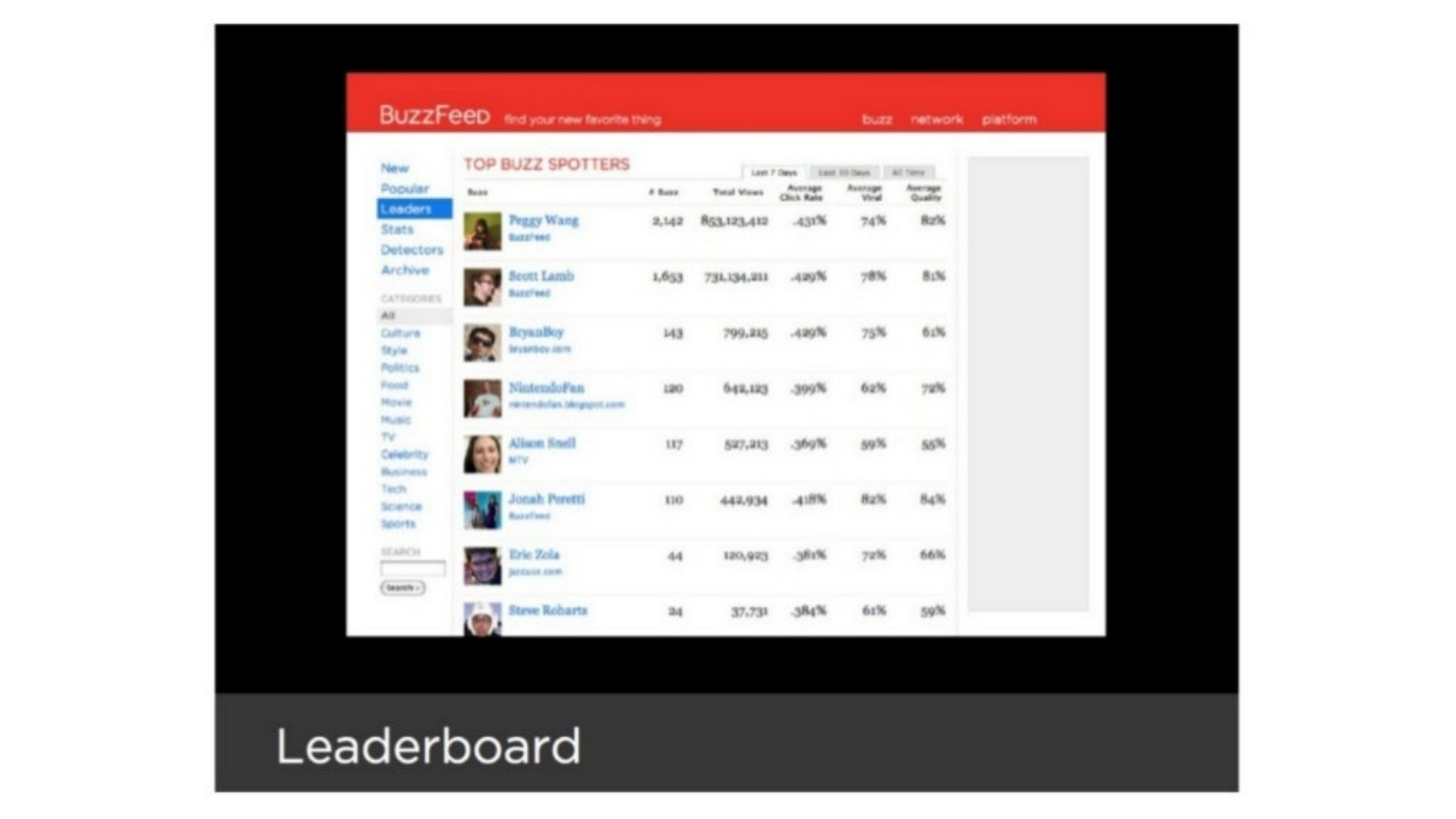
Top Buzz Spotters ranked by posts, total views, click rate, viral %, and quality. Peggy Wang, Scott Lamb, BryanBoy, and outside contributors.
Why it works
Gamification as growth loop. Public rankings incentivize power users and prove the network extends beyond staff.
Revenue Model
Free open platform for launching buzz; premium services. Advertising as Content, Distributed Promotion, Premium Tools, Trend Targeting.
Why it works
Freemium marketplace framing in six bullets. Consumer side stays free; every revenue line maps to a product slide that follows.
Market Direction
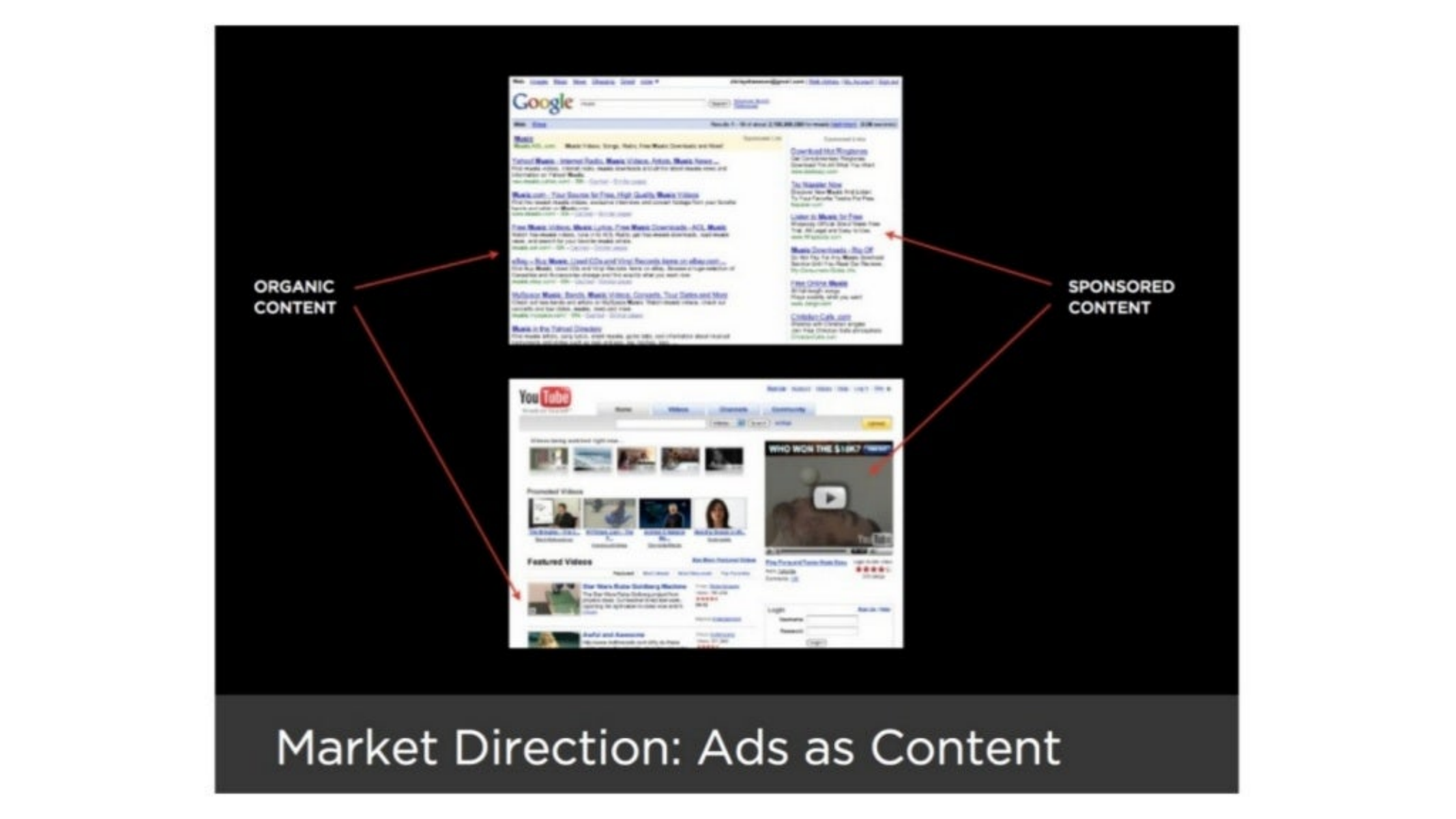
Google search results and YouTube homepage annotated, organic content vs sponsored content in the same format.
Why it works
Macro thesis with household-name precedents. Native ads aren't a BuzzFeed quirk; Google and YouTube already trained the market.
Advertising as Content
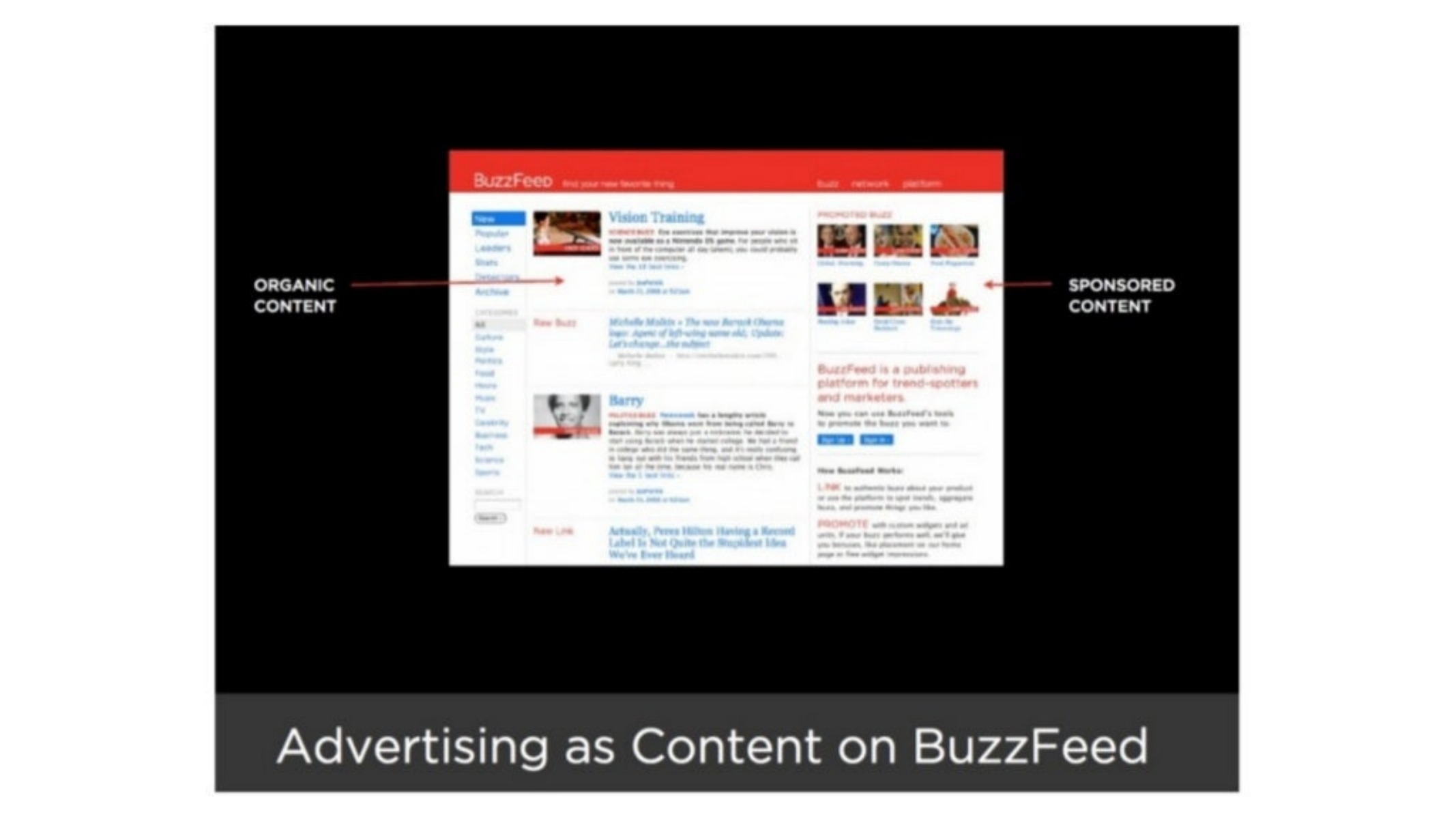
BuzzFeed homepage with organic feed vs Promoted Buzz sidebar, same visual format, different economics.
Why it works
Shows exactly what "ads as content" means on their own site. Side-by-side labels remove ambiguity for investors.
Distributed Promotion
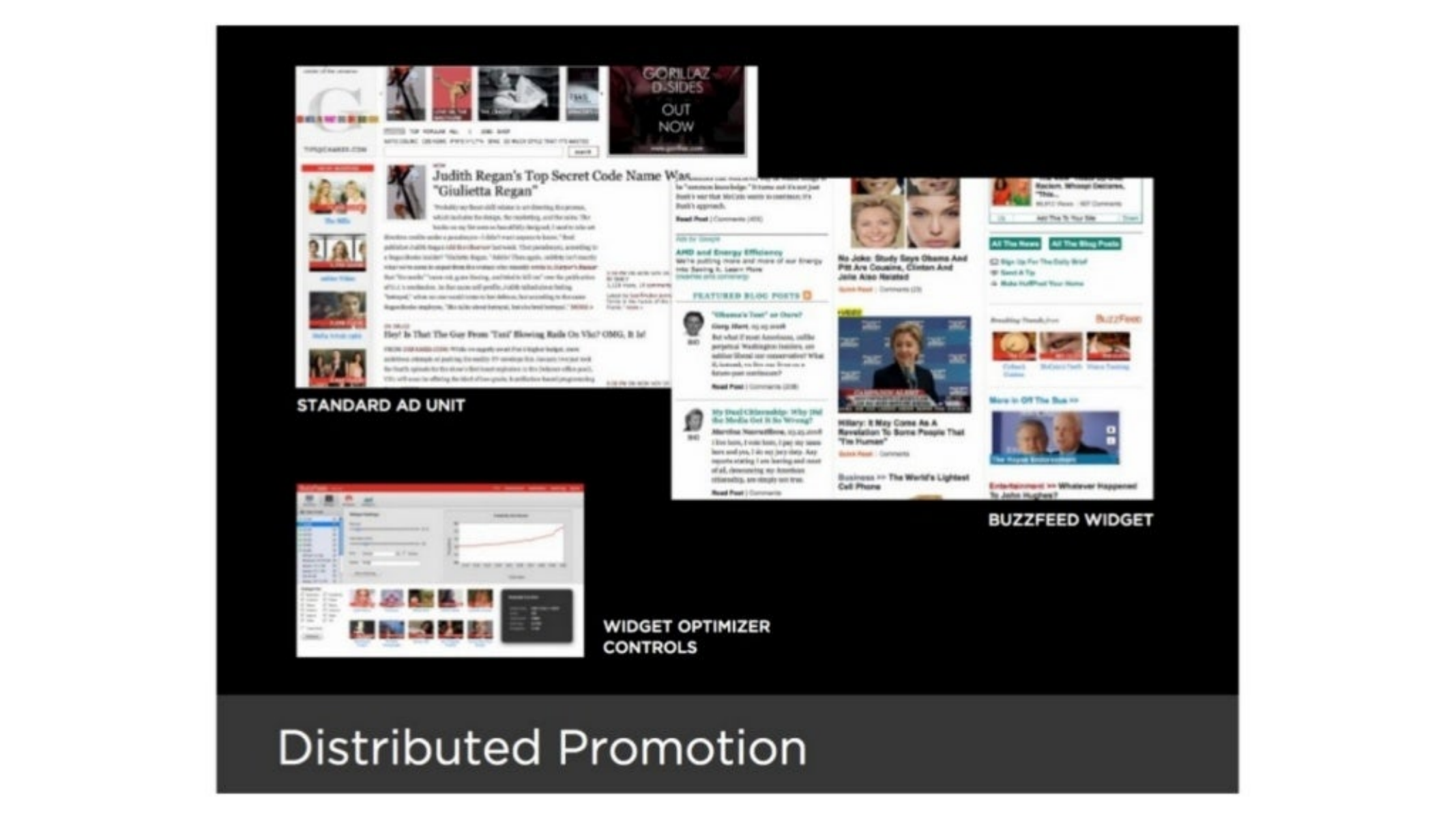
Standard banner ad on a third-party blog vs BuzzFeed widget with optimizer dashboard and upward traffic graph.
Why it works
Distribution > destination. Widgets on HuffPost-era sites extend reach and collect performance data competitors can't match.
Custom Promotion
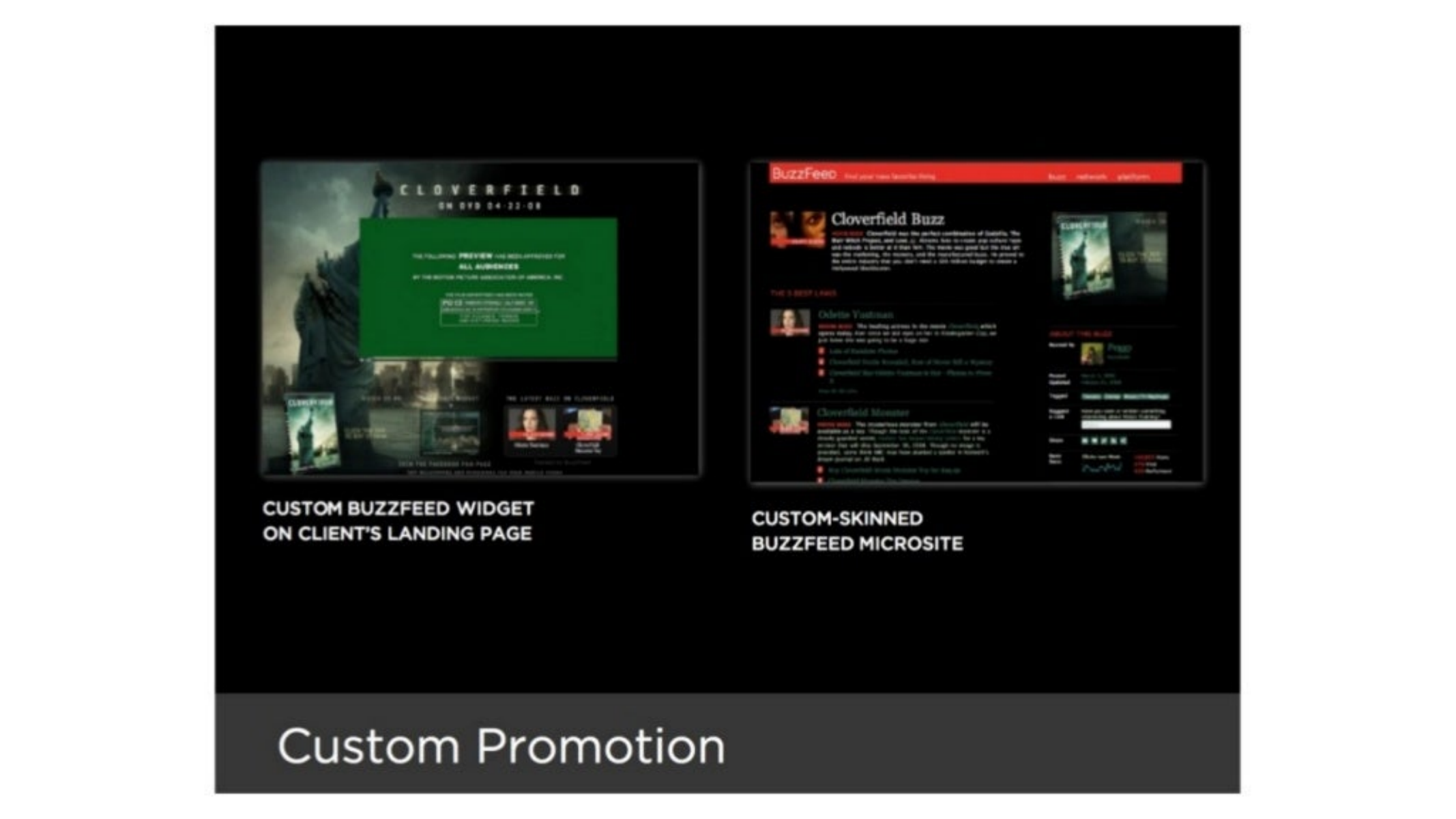
Cloverfield case study, custom BuzzFeed widget on the studio landing page and a branded BuzzFeed microsite.
Why it works
Named client, two deliverable formats. Enterprise advertisers see white-label options, not just self-serve listings.
Trend Targeting
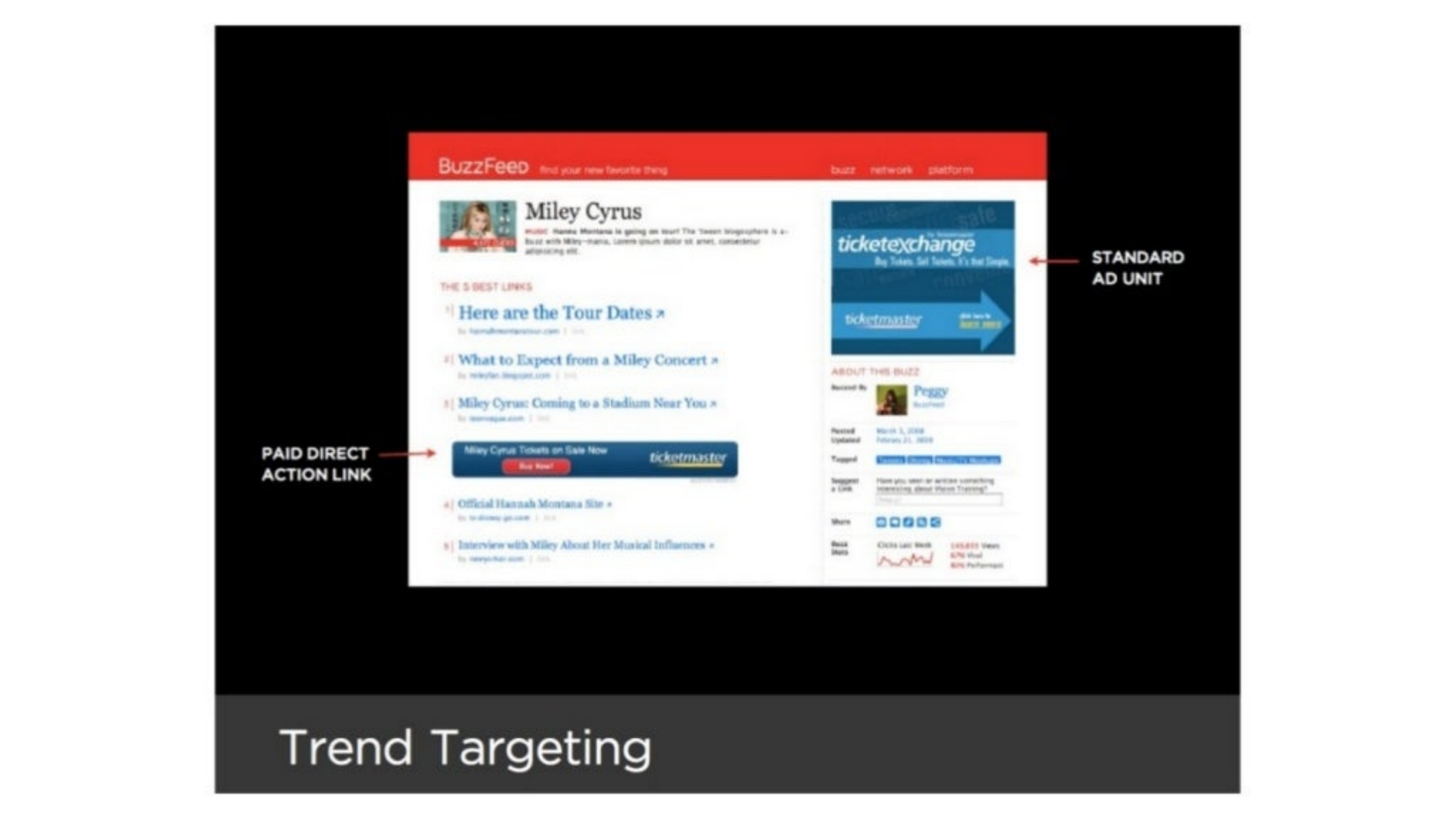
Miley Cyrus buzz page with a paid Ticketmaster direct-action link inside the link list and a standard sidebar ad unit.
Why it works
Contextual monetization at peak attention, ads match the trend, not the page template. Viral stats (148K views, 82% performance) close the loop.
Competitors
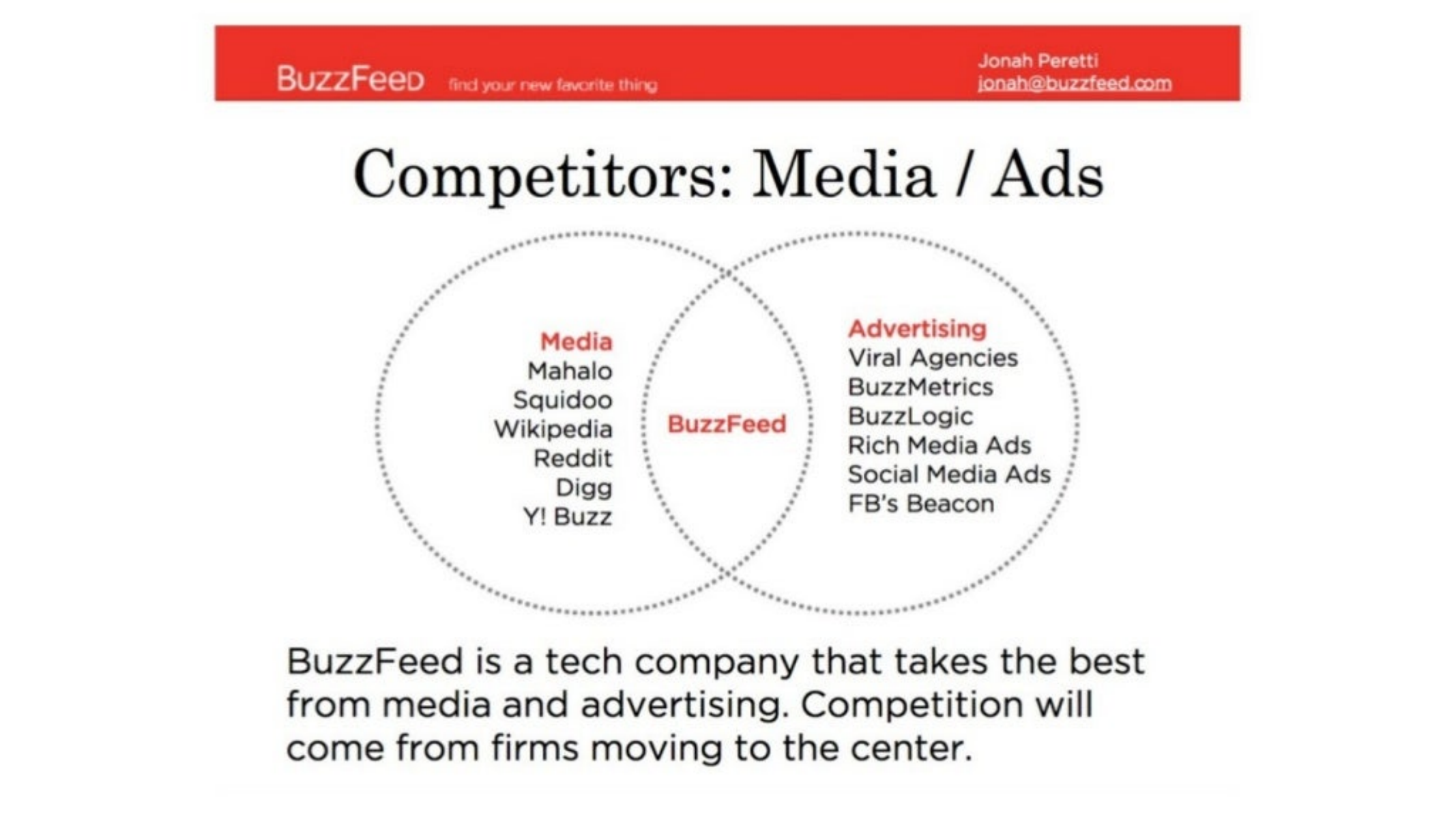
Venn diagram: Media circle (Reddit, Digg, Wikipedia, Mahalo) overlaps Advertising circle (viral agencies, BuzzMetrics, Facebook Beacon). BuzzFeed sits in the center.
Why it works
Kid-simple positioning that still holds up. No feature matrix, just a claim that only BuzzFeed hybridizes media and ad tech.
How Big Can This Get?
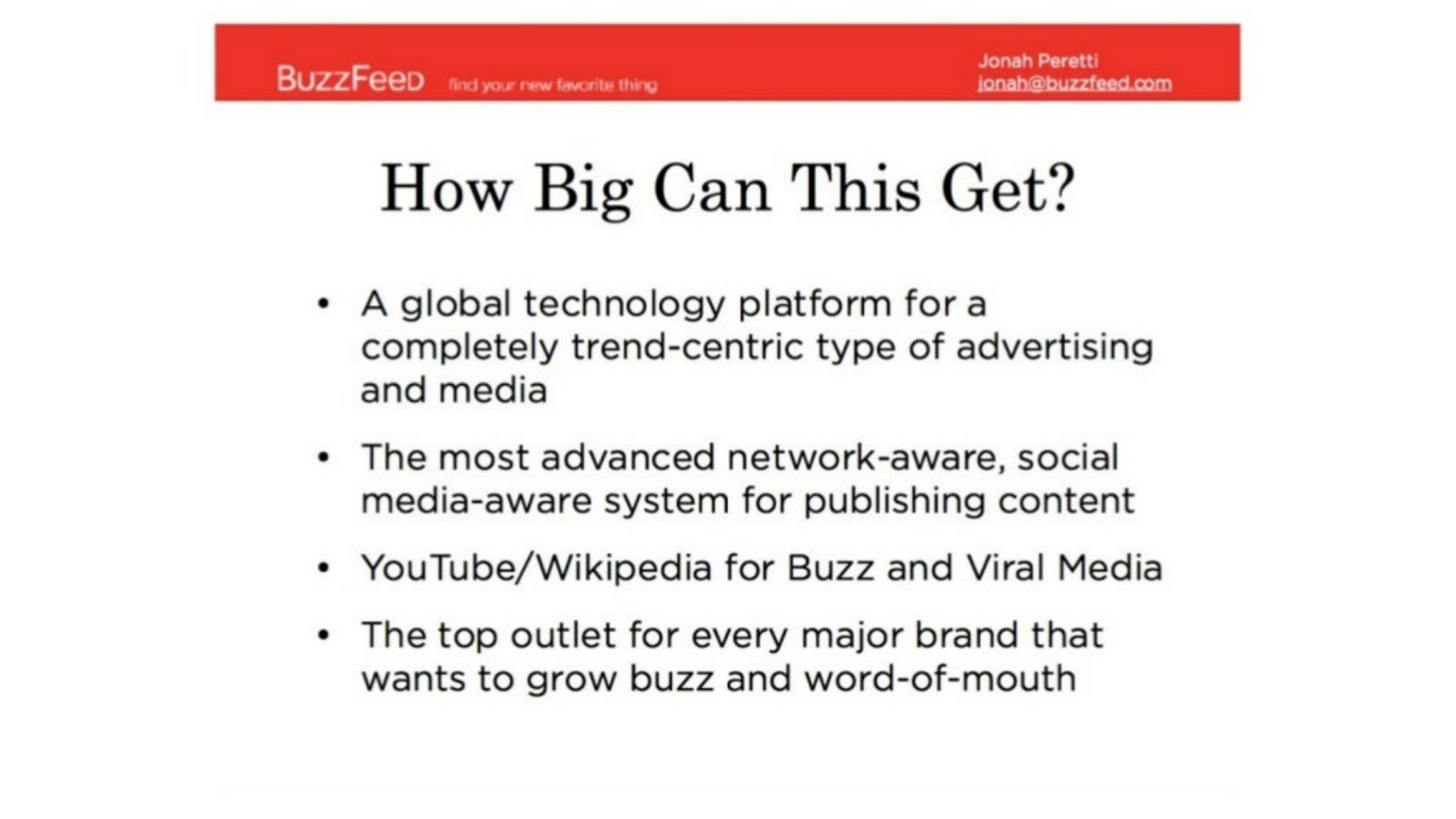
Global trend-centric ad platform, network-aware publishing system, "YouTube/Wikipedia for Buzz," top outlet for major brands.
Why it works
Vision slide after proof, not before. Analogies (YouTube, Wikipedia) give investors a mental bucket without fake TAM math.
The Team
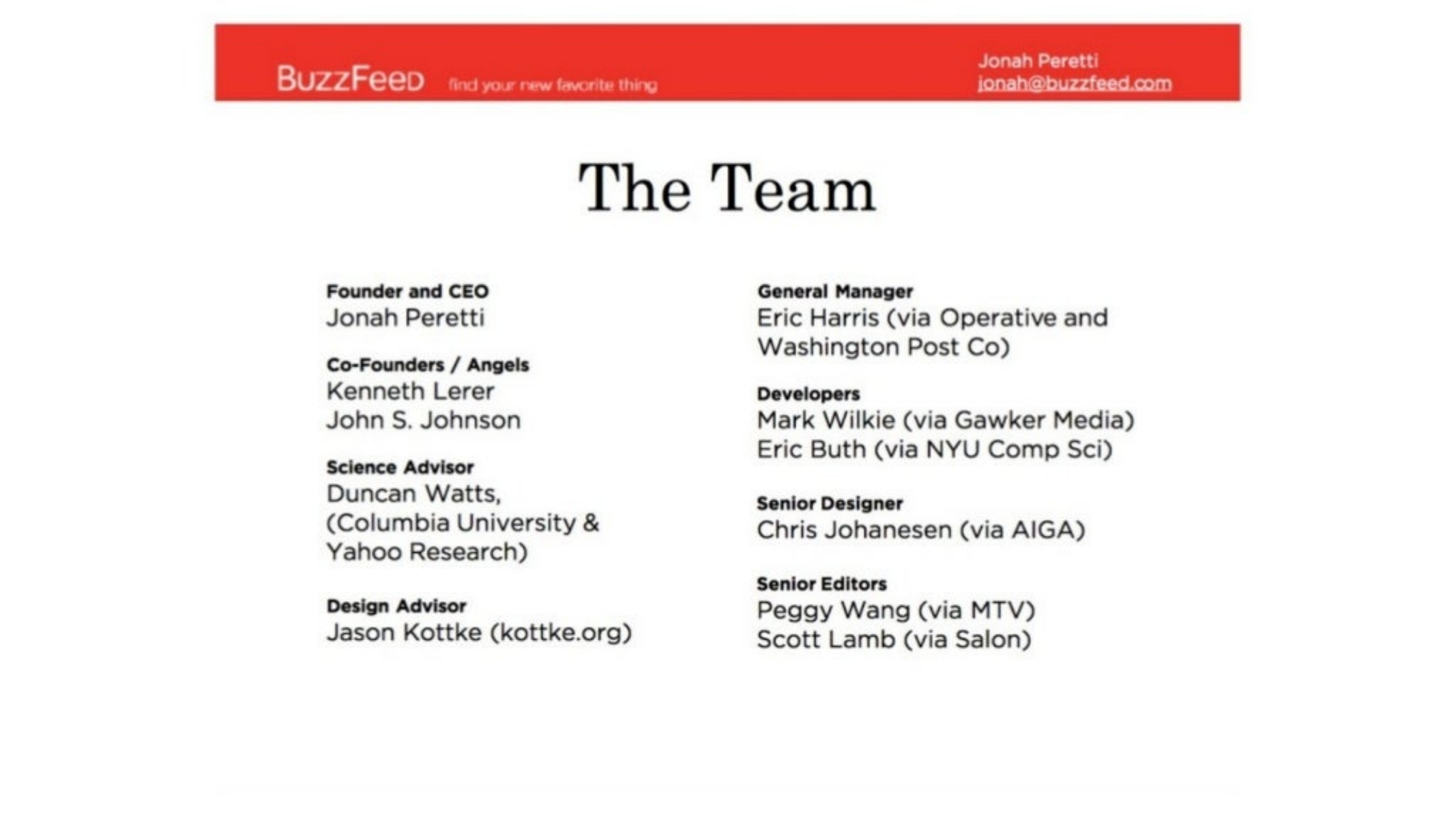
Jonah Peretti (CEO), co-founders Kenneth Lerer and John S. Johnson, advisors Duncan Watts and Jason Kottke, plus GM, devs, designers, and MTV/Salon editors.
Why it works
Pedigree-heavy roster. Lerer (HuffPost), Watts (Columbia/Yahoo Research), Kottke (blogging OG). Media + science + tech in one slide.
Contact
Jonah Peretti, jonah@buzzfeed.com, buzzfeed.com
Why it works
Founder email, not a generic info@ address. Signals Jonah is the decision-maker and the deck is ready for follow-up.
Compare similar investor decks
More series a and media presentations in the library.



Your pitch deck, ready before the meeting
Start with your website or idea and see your slides in minutes. Pay only when you download.
Generate a deck