
Airbnb pitch deck (2009)
Brian Chesky, Joe Gebbia, and Nathan Blecharczyk pitched Airbnb in 2008 and raised $600K after Y Combinator. Fourteen slides: problem, product, market, business model, team, and financials. No filler.
What founders can steal from Airbnb's deck
- Name three problems travelers actually feel: price, disconnection from local culture, broken booking.
- Validate demand with real comparables (Couchsurfing users, Craigslist listings) before TAM slides.
- Classic arc: problem, solution, market, product, moat, team, ask.
- Business model slide: one take rate, simple math, one number investors repeat.
Historical round profile
- Stage
- Seed
- Year
- 2009
- Outcome / Raise
- $600K seed (2008 deck)
- Business model
- Online marketplace for lodging and travel experiences
- HQ
- San Francisco, California
Slide-by-slide breakdown (14 slides)
Every slide in Airbnb's 2009 presentation, what job it performs in the room, and how to adapt the sequence for your own deck.
Cover
Book rooms with locals, rather than hotels.
Why it works
The cover states the value prop in one line, no tagline soup.
Problem
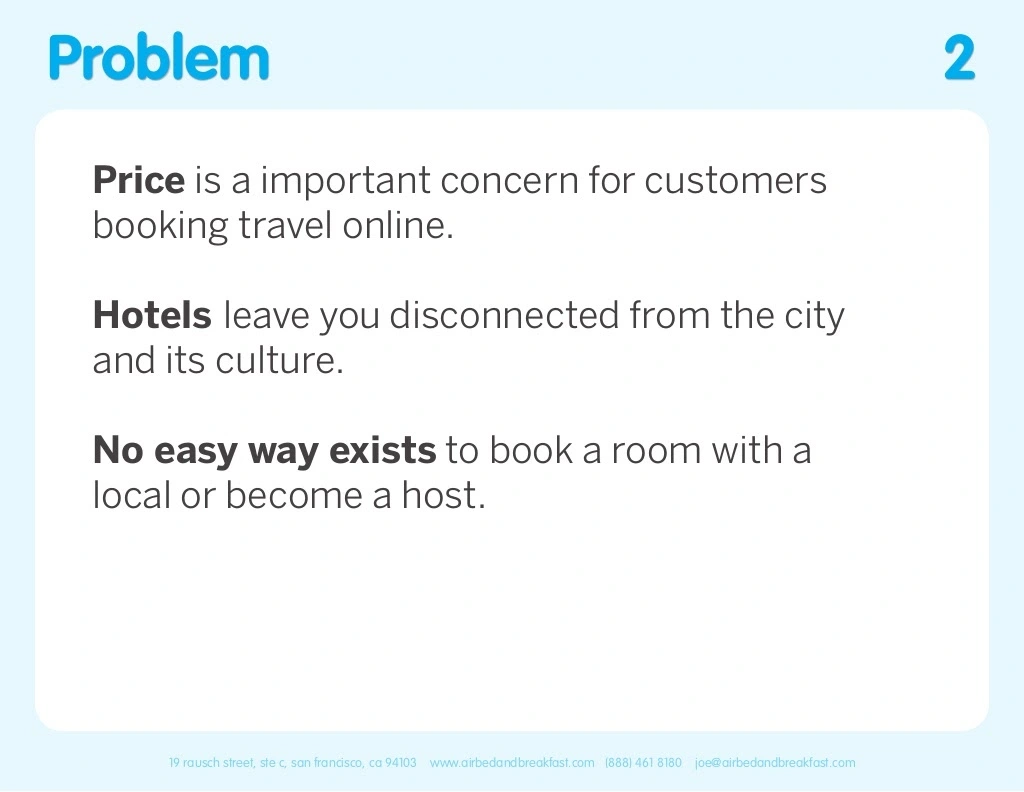
Price anxiety, hotels disconnect you from culture, and no easy way to book with locals or become a host.
Why it works
Three concrete pain points with bold keywords. Each problem is something travelers feel,
Solution
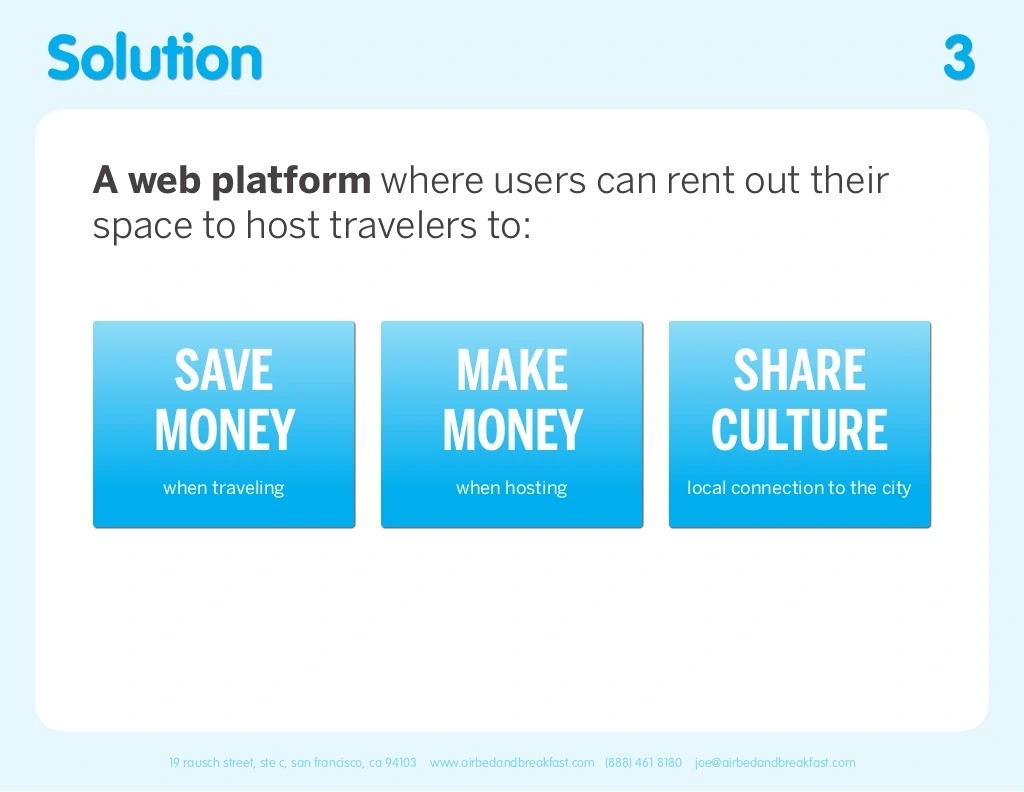
A web platform to rent space to travelers, save money traveling, make money hosting, connect with local culture.
Why it works
Solution matches the three problems. Icons + short tiles keep it scannable before the product demo.
Market validation
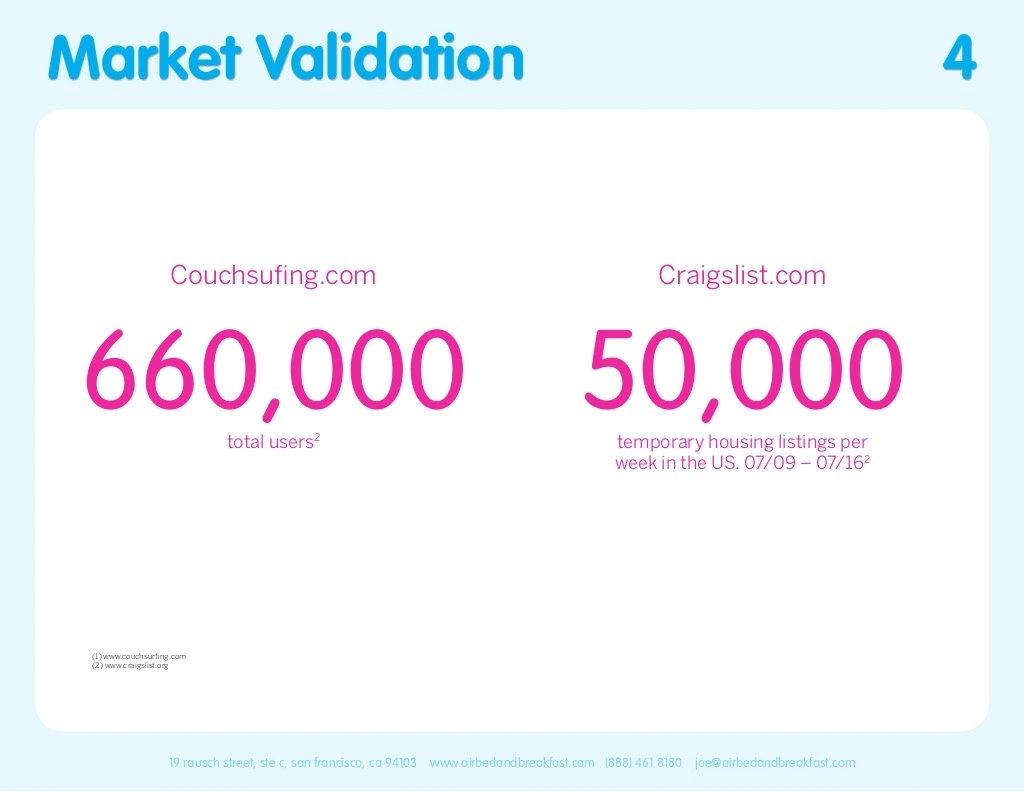
Couchsurfing: 670,000 users. Craigslist: 17,000 temporary housing listings in SF and NYC in one week.
Why it works
Validation uses real, named comparables, not vanity TAM. Shows demand existed before Airbnb scaled supply.
Market size
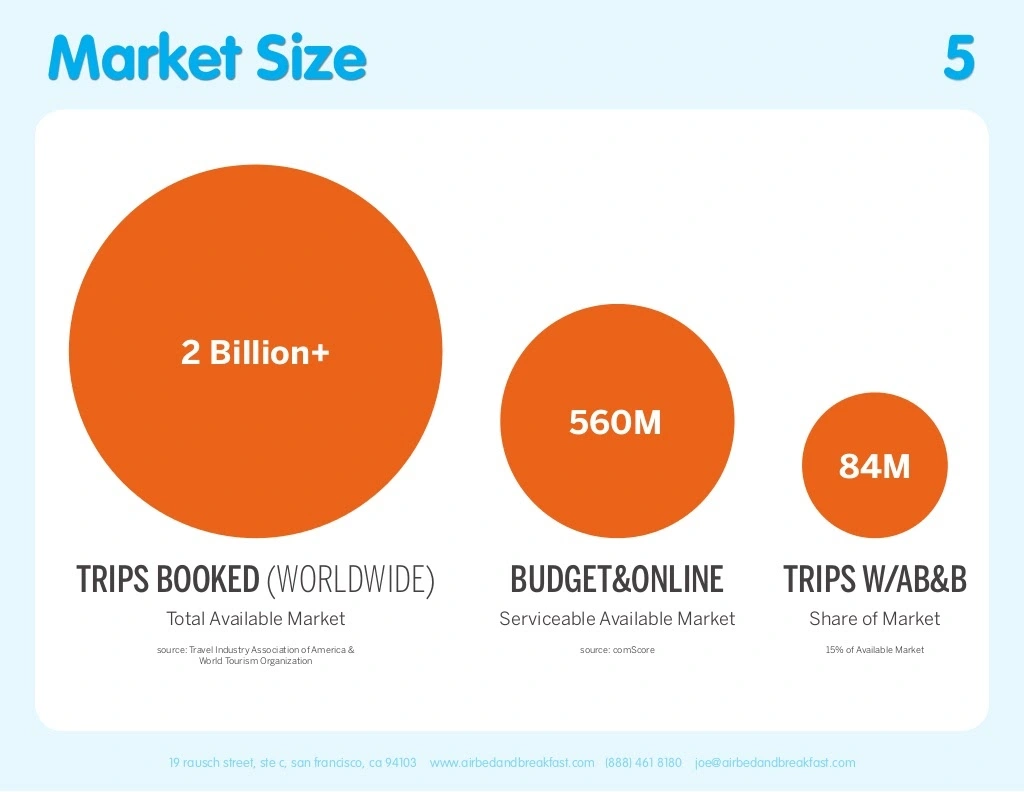
$2B+ trips booked worldwide → $560M budget/online segment → $84M serviceable share (15%).
Why it works
Classic TAM → SAM → SOM funnel with three numbers investors can repeat. Keeps ambition credible.
Product
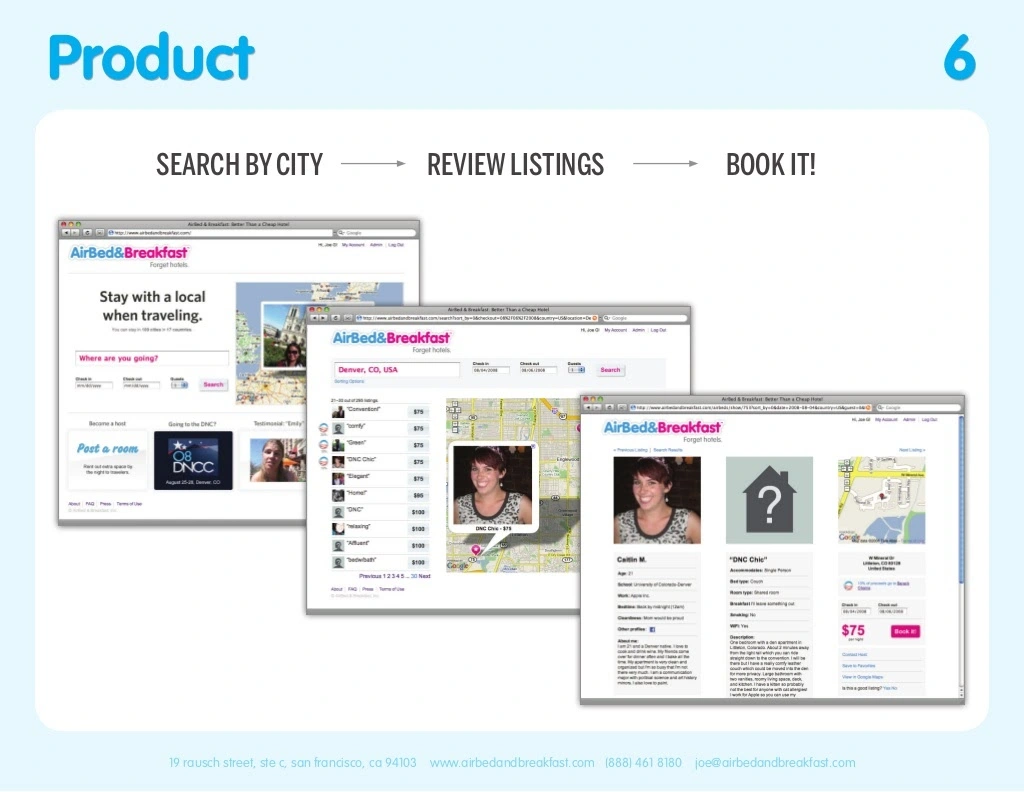
Search-by-city interface with listings, map pins, and booking flow.
Why it works
Product slide shows the actual UI, screenshots dominate. Shows the thing exists, not just the idea.
Business model
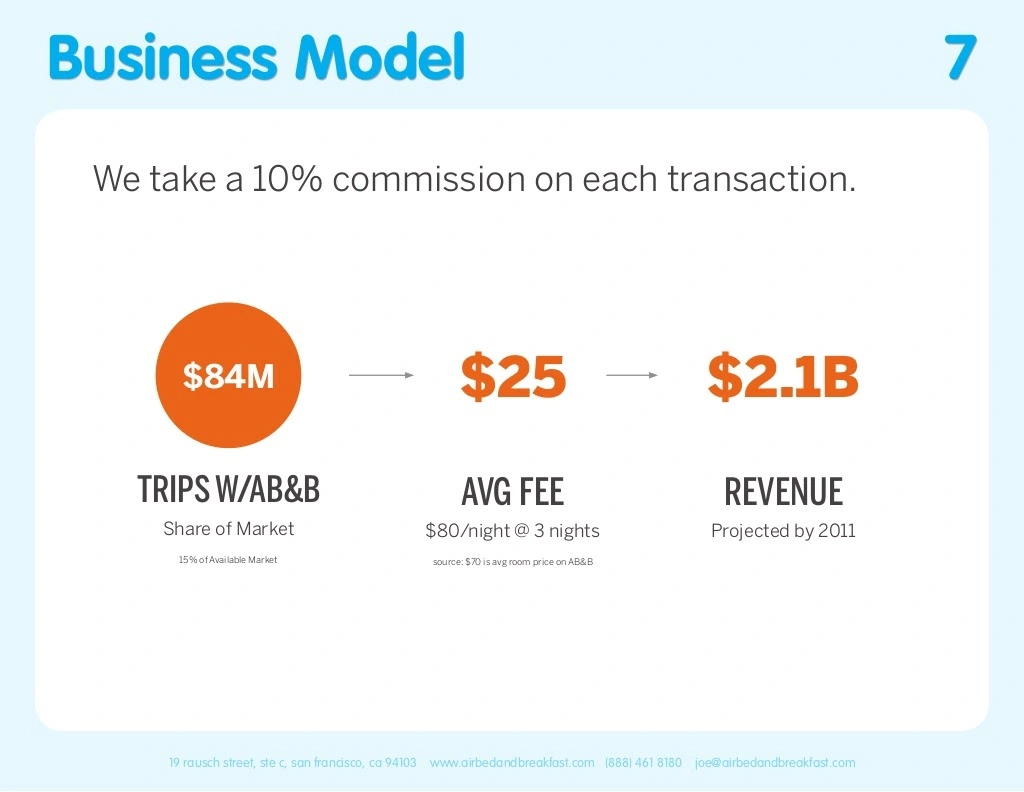
10% commission on completed bookings, host fee + guest fee on each transaction.
Why it works
One killer metric slide: simple take rate, visual math to revenue. Investors remember this slide years later.
Market adoption
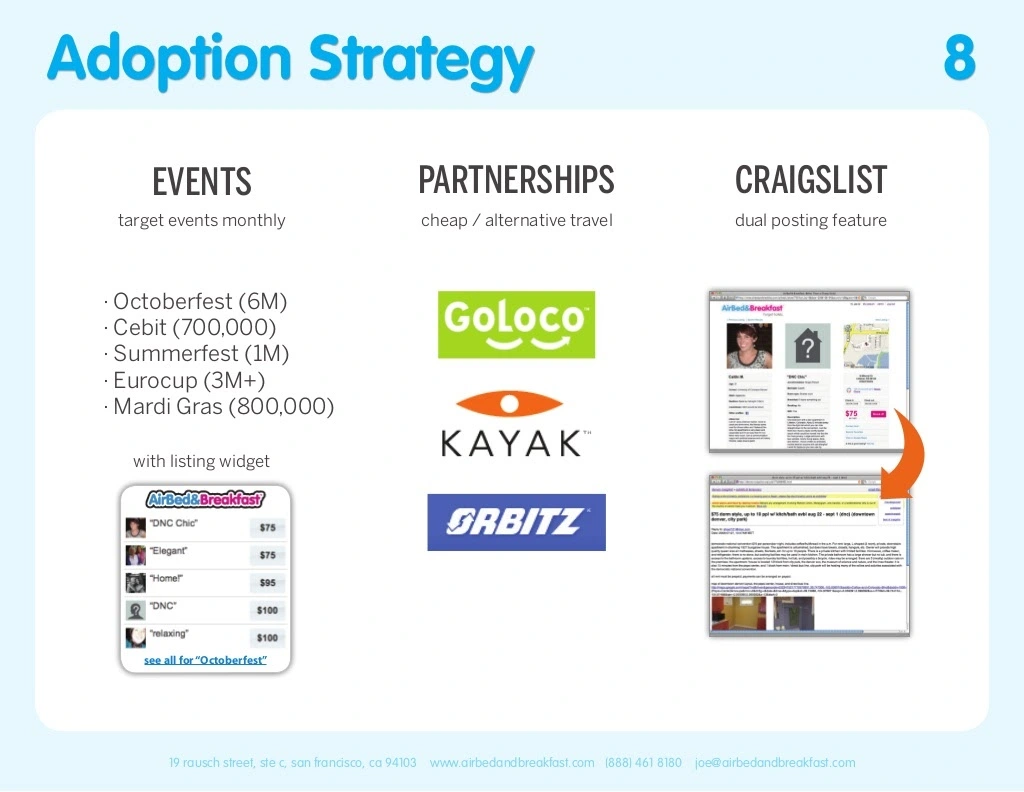
Events, partnerships, and classifieds as acquisition channels for hosts and guests.
Why it works
GTM before competition, shows they thought about how to bootstrap liquidity on both sides of the marketplace.
Competition
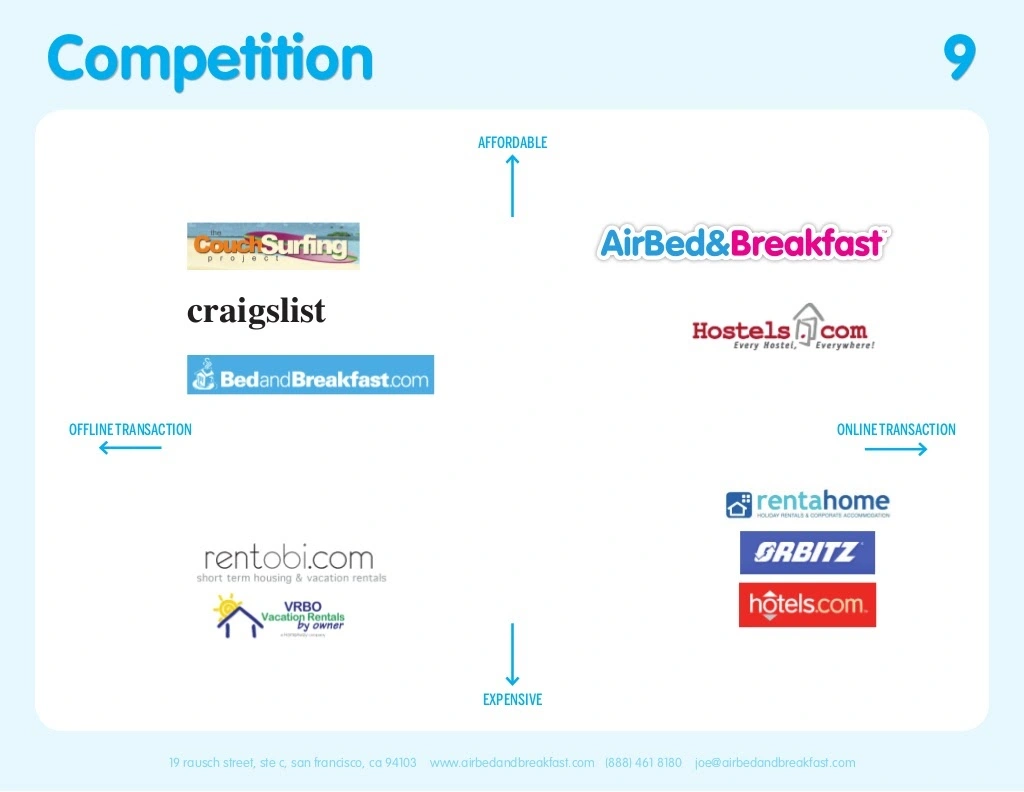
2×2 matrix: temporary housing vs hotels, transactional vs non-transactional.
Why it works
Positions Airbnb in an empty quadrant instead of a feature checklist. Makes the wedge obvious.
Competitive advantages
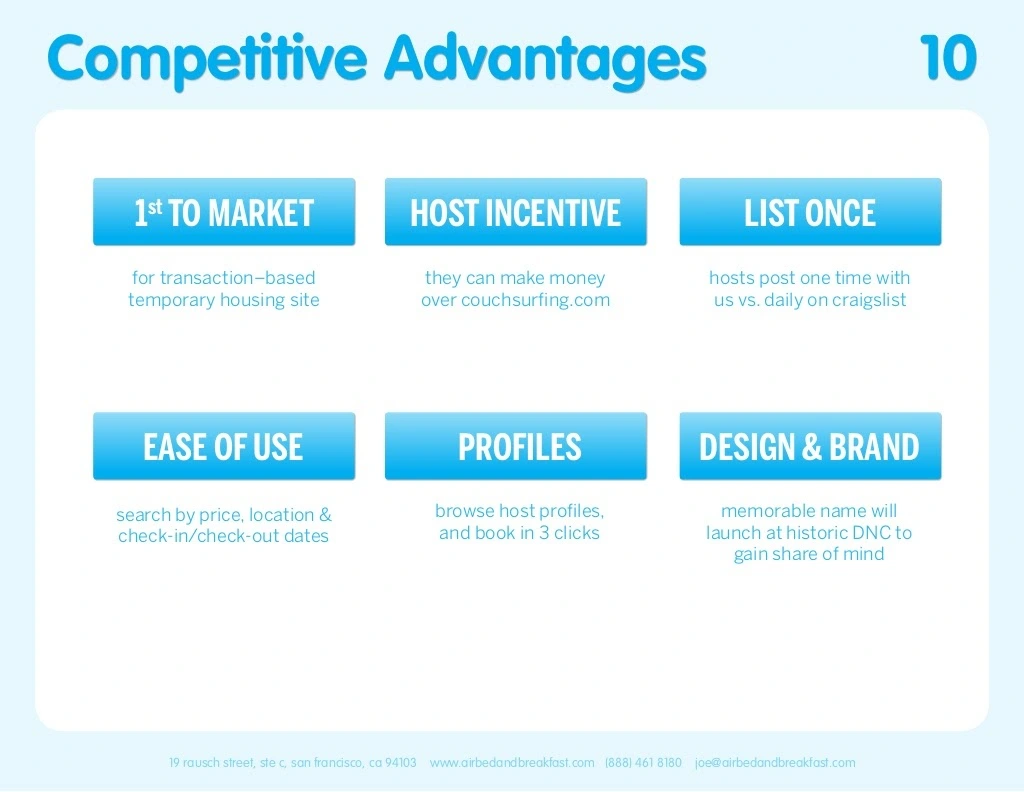
First transaction-based temp housing marketplace, host incentives, profiles, 3-click booking, search by price/location.
Why it works
Six short advantages in a grid, defensibility without a moat essay. Each item is operational, not buzzwords.
Team
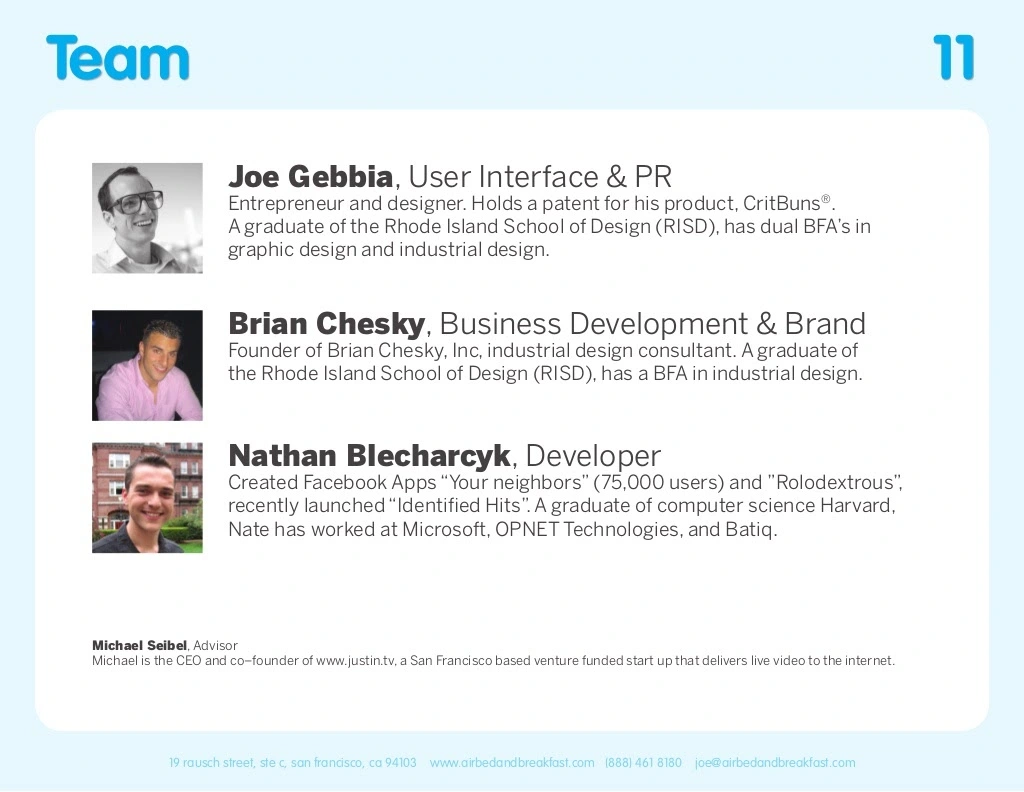
Brian Chesky, Joe Gebbia, Nathan Blecharczyk, design, business, and engineering from RISD/Harvard.
Why it works
Real founders with specific credentials. YC-era decks win on team fit as much as market size.
Press
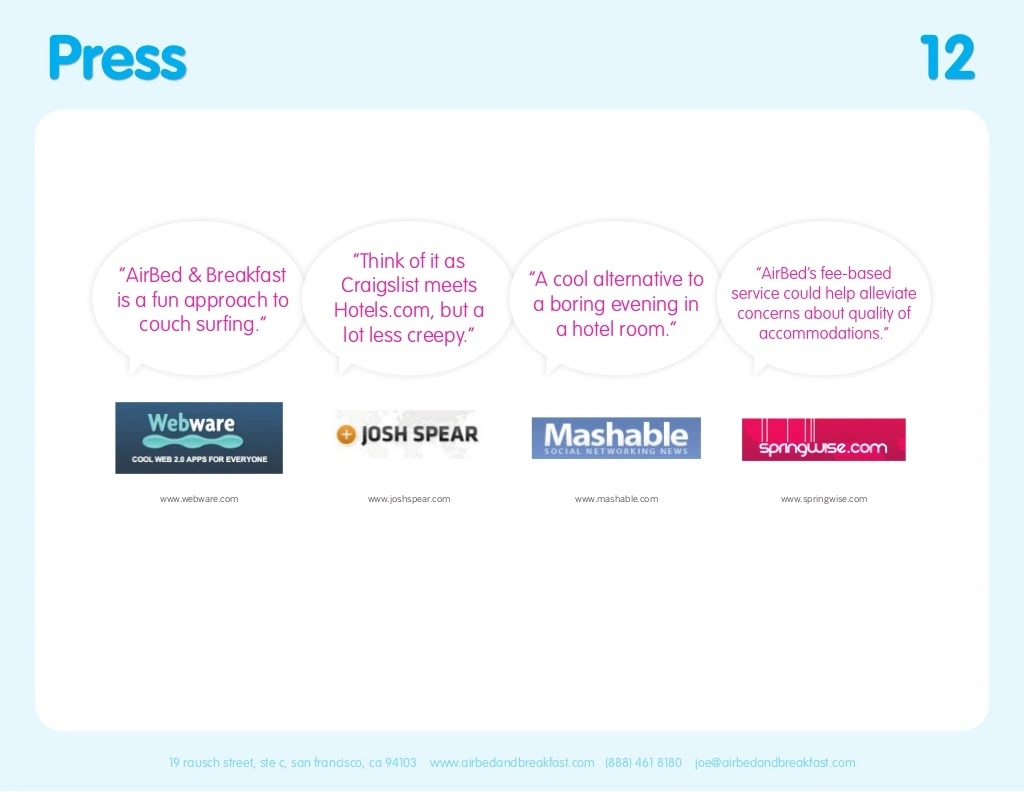
Early coverage from Mashable, Webware, Josh Spear, Springwise.
Why it works
Social proof from era-appropriate tech press, shows traction beyond friends and family.
User testimonials
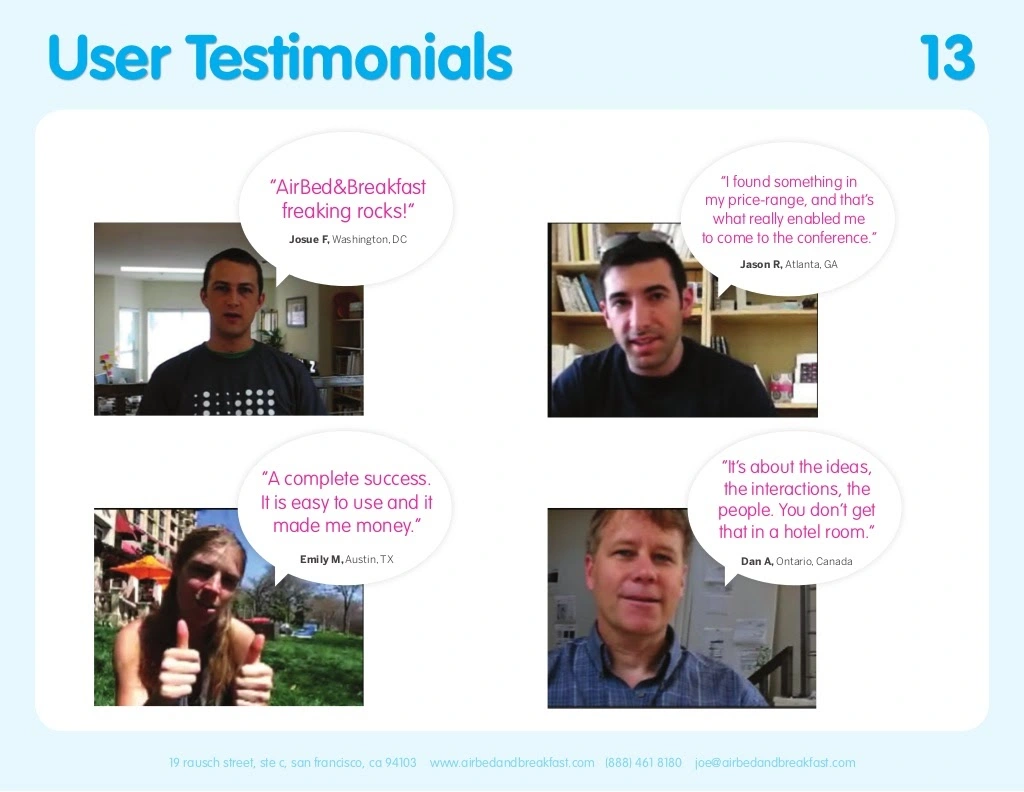
Quotes from early hosts and guests with photos and locations.
Why it works
Human stories ground the metrics. Marketplace decks need both sides, supply and demand, saying yes.
Financial
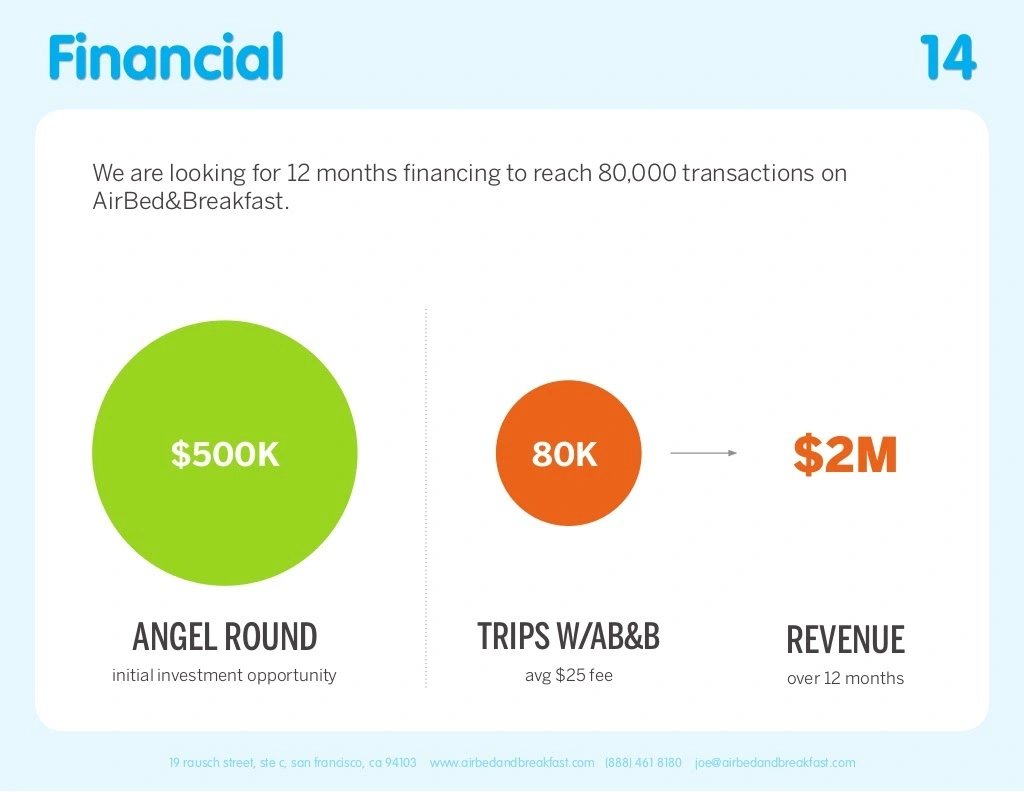
Revenue projection path from early bookings to $200M, circles and arrows, not a dense spreadsheet.
Why it works
Financial ask as a visual story, not a model dump. Shows ambition while staying on one slide.
Compare similar investor decks
More seed and hospitality presentations in the library.



Your pitch deck, ready before the meeting
Start with your website or idea and see your slides in minutes. Pay only when you download.
Generate a deck