
Tinder pitch deck (2013)
Sean Rad and Joe Munoz built the first version of Match Box at a 2012 hackathon inside IAC's Hatch Labs incubator, months before the flame logo and Tinder name. This 10-slide deck sold the product through a story about Matt, a relatable guy at a party who cannot approach someone he likes. No TAM slide, no competitor matrix, no team page, just fear of rejection, a live app demo, and a freemium match model that foreshadowed how Tinder would monetize at scale.
What founders can steal from Tinder's deck
- Name the emotional problem, not the market gap, fear of rejection is universal and investors feel it before they see the TAM.
- Use a character arc (Matt at a party) so the product demo lands as resolution, not a feature tour.
- Show a working app early. Facebook login and real UI screenshots let investors download and test during the pitch.
- Make the core mechanic obvious: mutual liking means you only hear yes, never public rejection.
- Monetize the moment of highest intent, pay to reveal who liked you back when curiosity peaks.
Historical round profile
- Stage
- Seed
- Year
- 2013
- Outcome / Raise
- Seed (2013 deck)
- Business model
- Mobile dating app with premium upsells
- HQ
- Los Angeles, California
Slide-by-slide breakdown (10 slides)
Every slide in Tinder's 2013 presentation, what job it performs in the room, and how to adapt the sequence for your own deck.
Cover
Match Box wordmark in orange script with the tagline "the flirting game…"
Why it works
Pre-Tinder branding on a bare cover, no ask, no metrics. The name and tagline signal playful social discovery rather than a clinical dating database.
Meet Matt
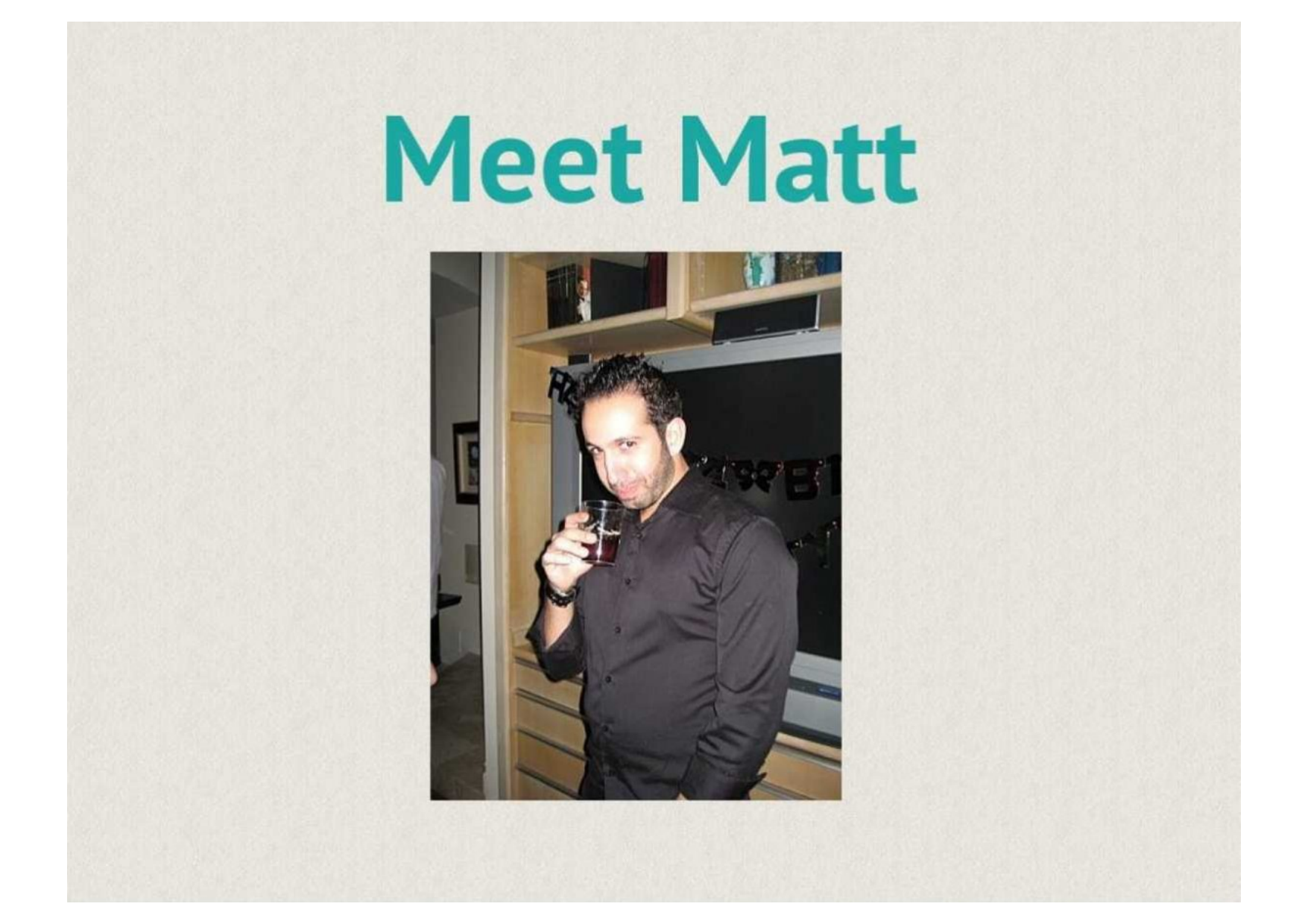
Portrait photo of Matt holding a drink under a "Meet Matt" headline.
Why it works
Opens a narrative instead of a pitch, one face, no bullets. Investors meet a protagonist before they see a product, which makes the problem slides feel personal.
Matt at a party
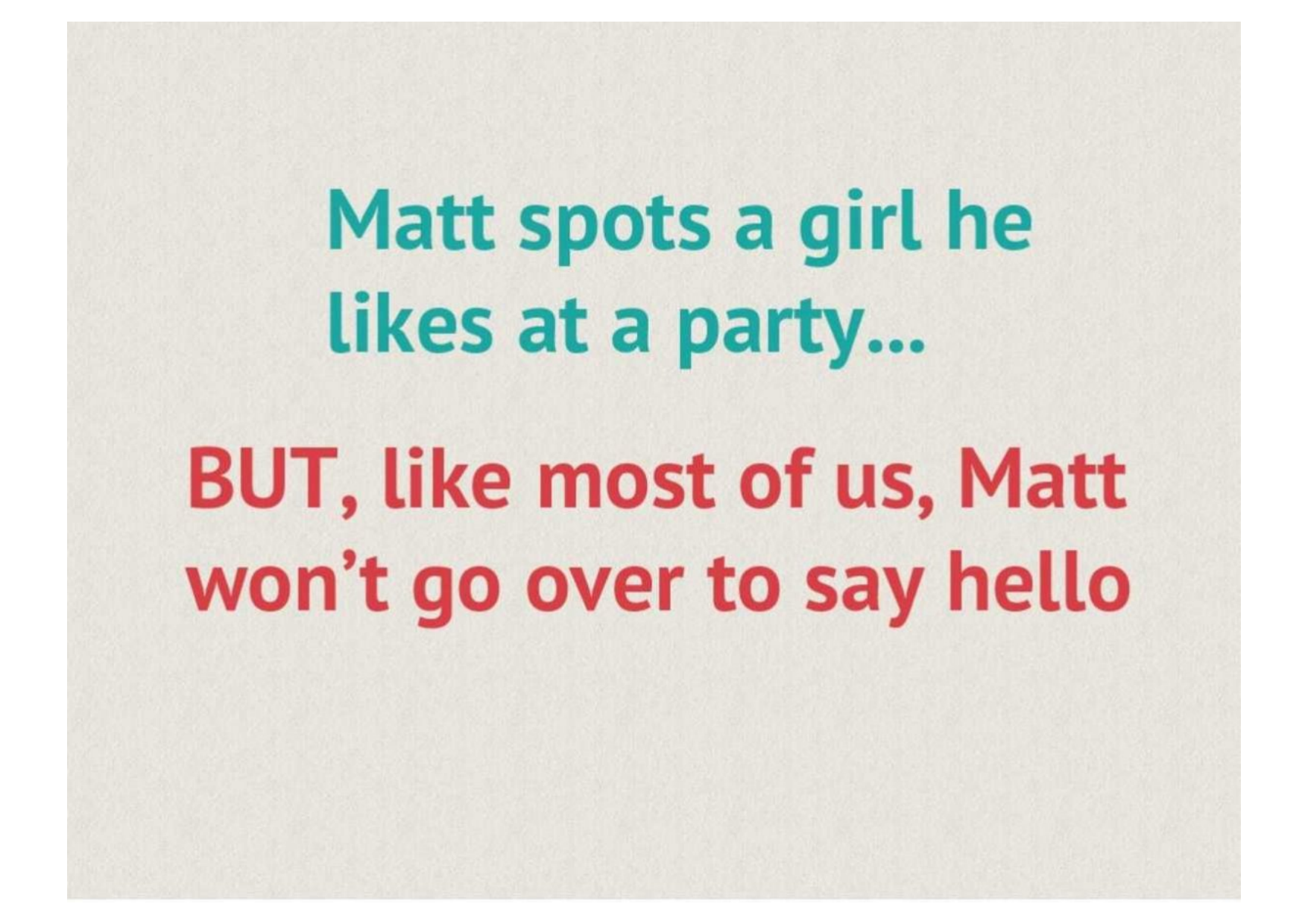
Matt spots a girl he likes at a party, but like most people he will not walk over to say hello.
Why it works
Sets the scene in two sentences, teal setup, red "BUT" pivot. The conflict is social inertia, not "online dating is broken," which keeps the story relatable to anyone in the room.
Fear of rejection
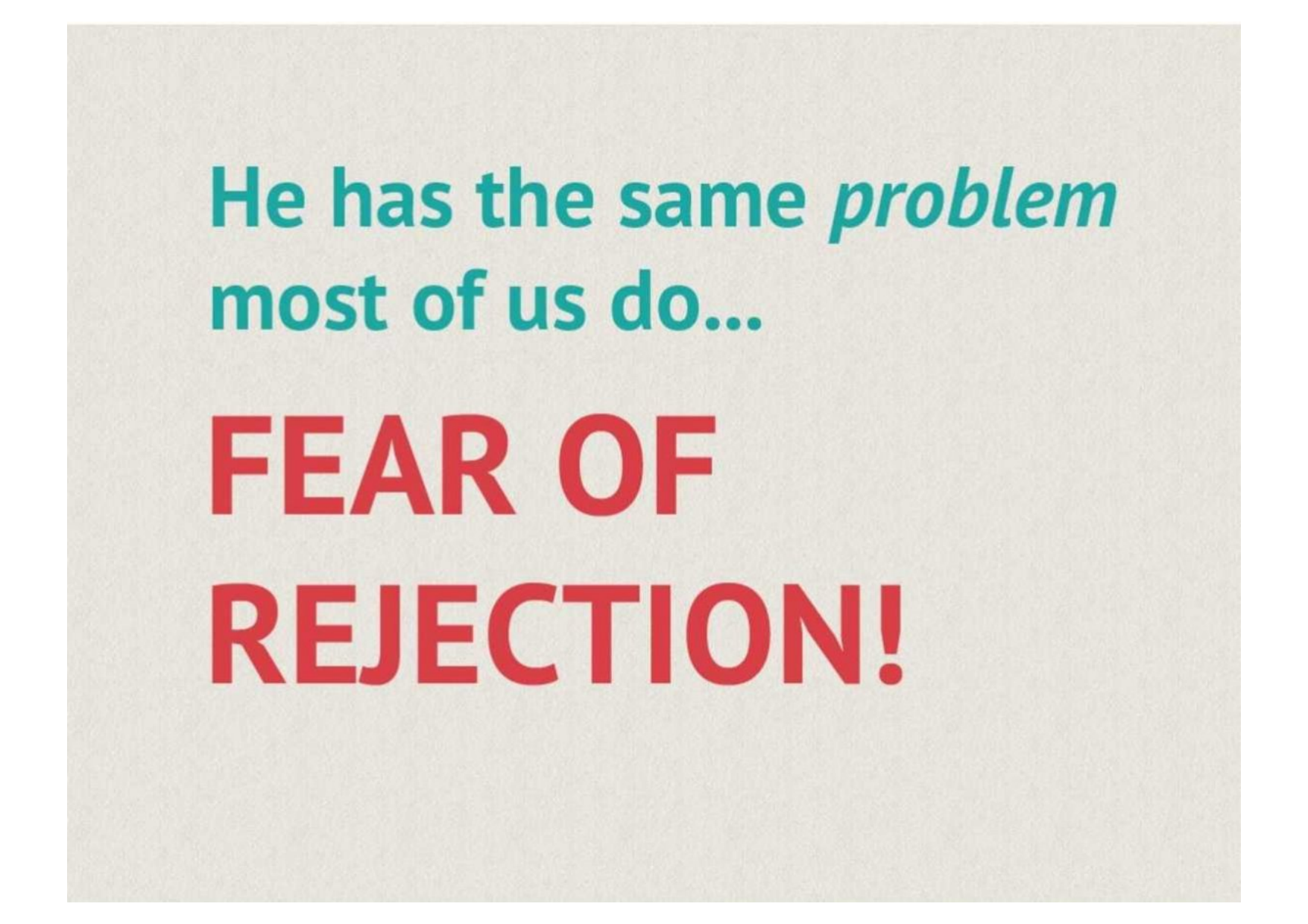
Matt shares the same problem most of us do: fear of rejection.
Why it works
Names the emotional barrier in all caps, the deck's real insight. Consumer apps that win on behavior change often pitch psychology before market size.
The solution
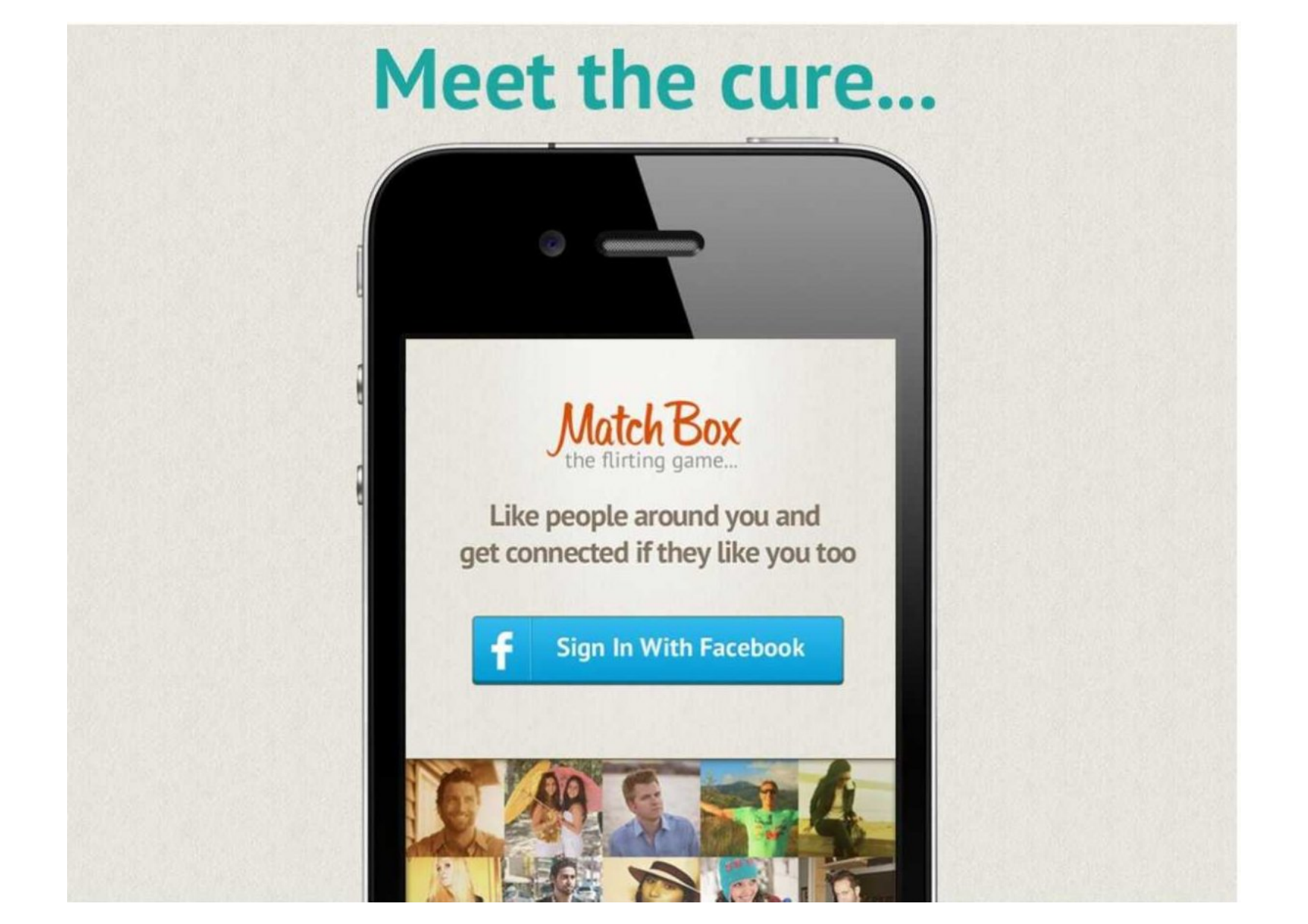
"Meet the cure…". Match Box iPhone screenshot with Facebook sign-in and copy: like people around you, get connected if they like you too.
Why it works
Resolution slide doubles as product proof. Live UI, one-tap onboarding, and a value prop that directly answers slide 4, you only connect when interest is mutual.
Like or Not
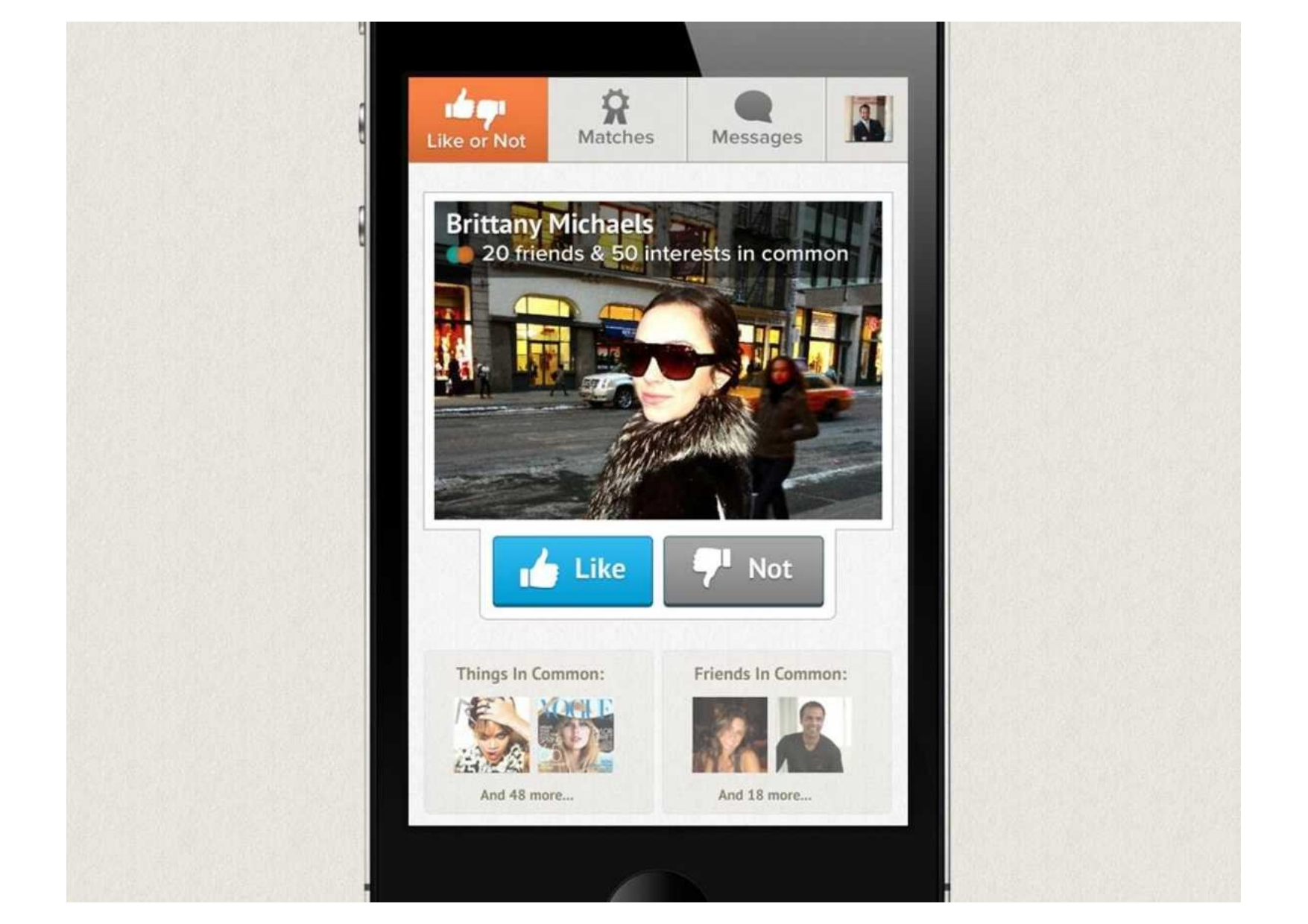
App screen showing Brittany Michaels' profile with mutual friends and interests, plus Like and Not buttons.
Why it works
Product demo starts with the core loop, binary choice on a nearby person enriched with Facebook social graph. Pre-swipe era, but the mechanic is already clear.
Matches
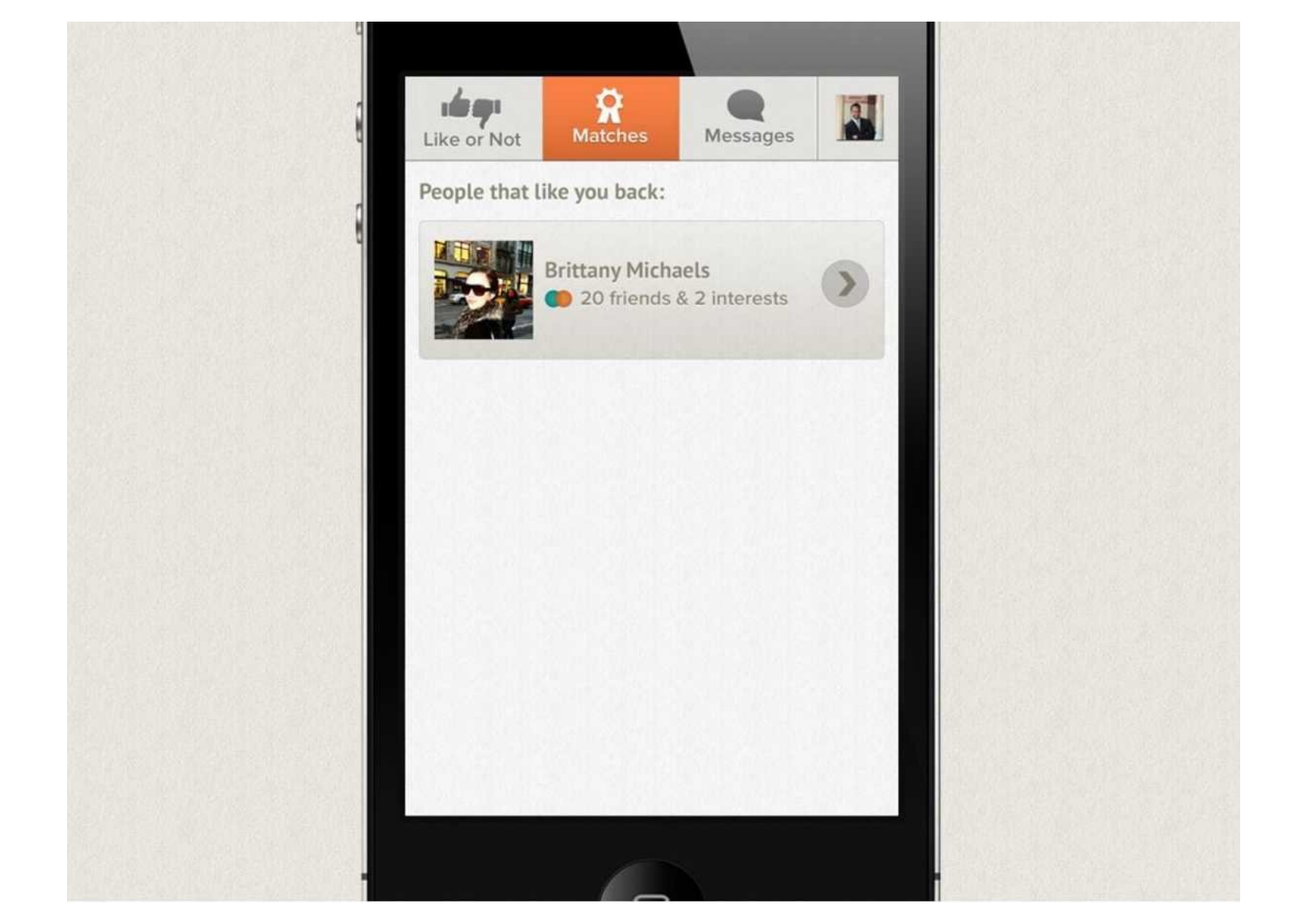
Matches tab listing "People that like you back". Brittany Michaels appears as a mutual match.
Why it works
Shows the double opt-in payoff: you only see people who already chose you. That structural design is how the app removes rejection from the user experience.
Messaging
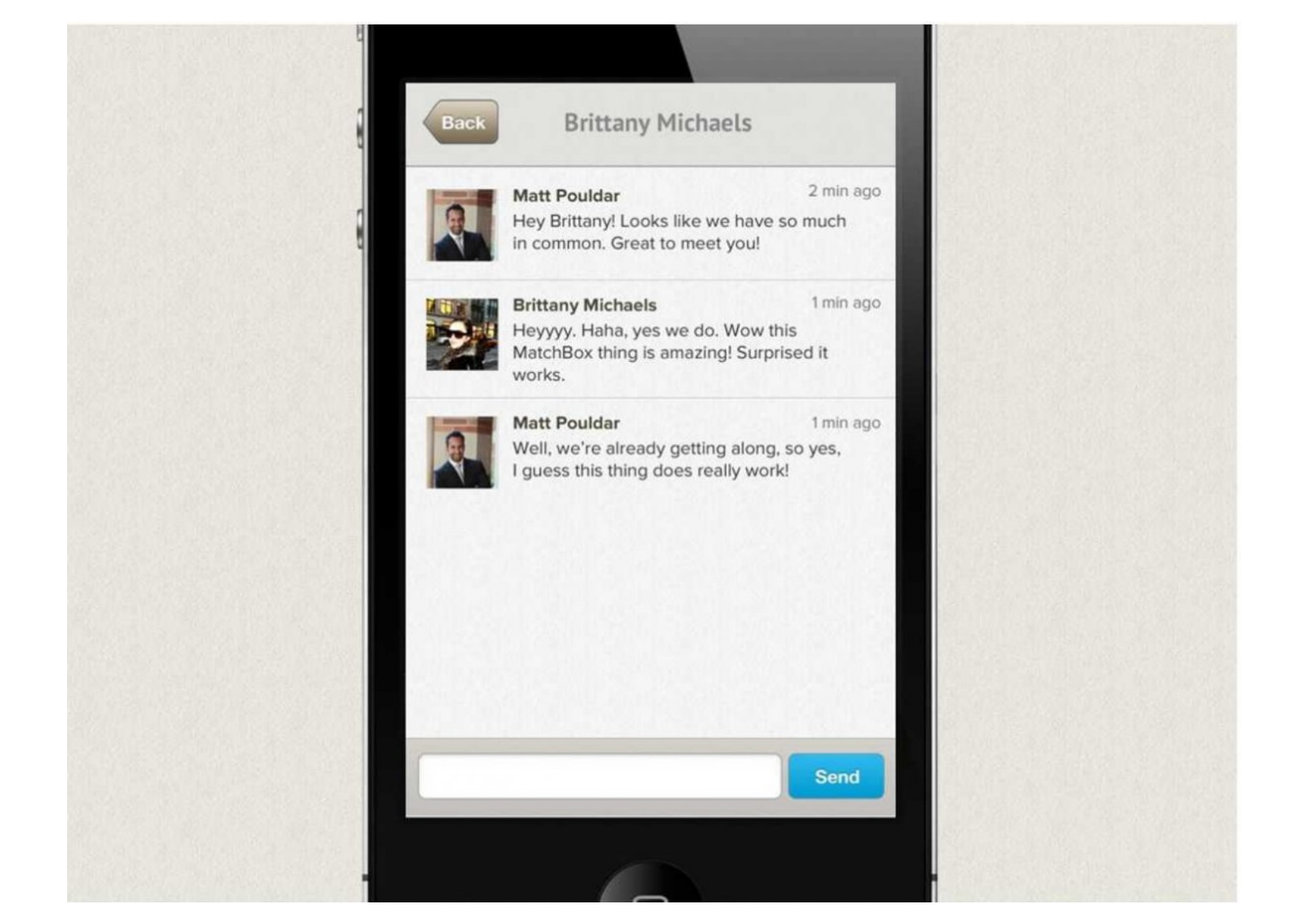
In-app chat between Matt and Brittany, they bond over shared interests and joke that MatchBox really works.
Why it works
Story closes in-product with a happy ending. The scripted exchange proves conversation starters (mutual friends, interests) and gives investors a emotional finish to Matt's arc.
Under the hood
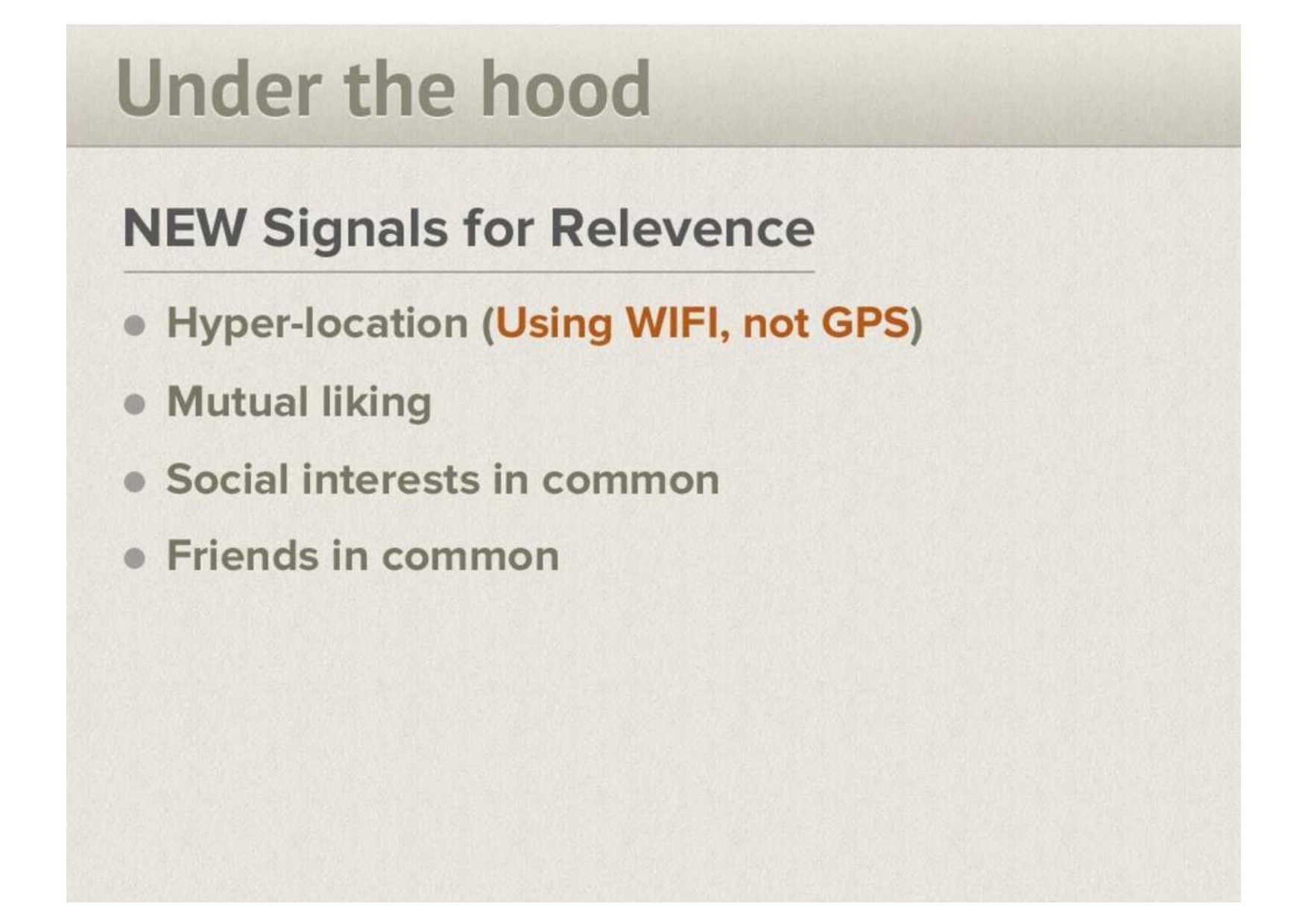
Four matching signals: hyper-location via WiFi (not GPS), mutual liking, social interests in common, and friends in common.
Why it works
Only "business" slide before monetization, technical differentiation in four bullets. WiFi over GPS and Facebook graph data were credible moats in the early mobile dating wave.
Revenue opportunity
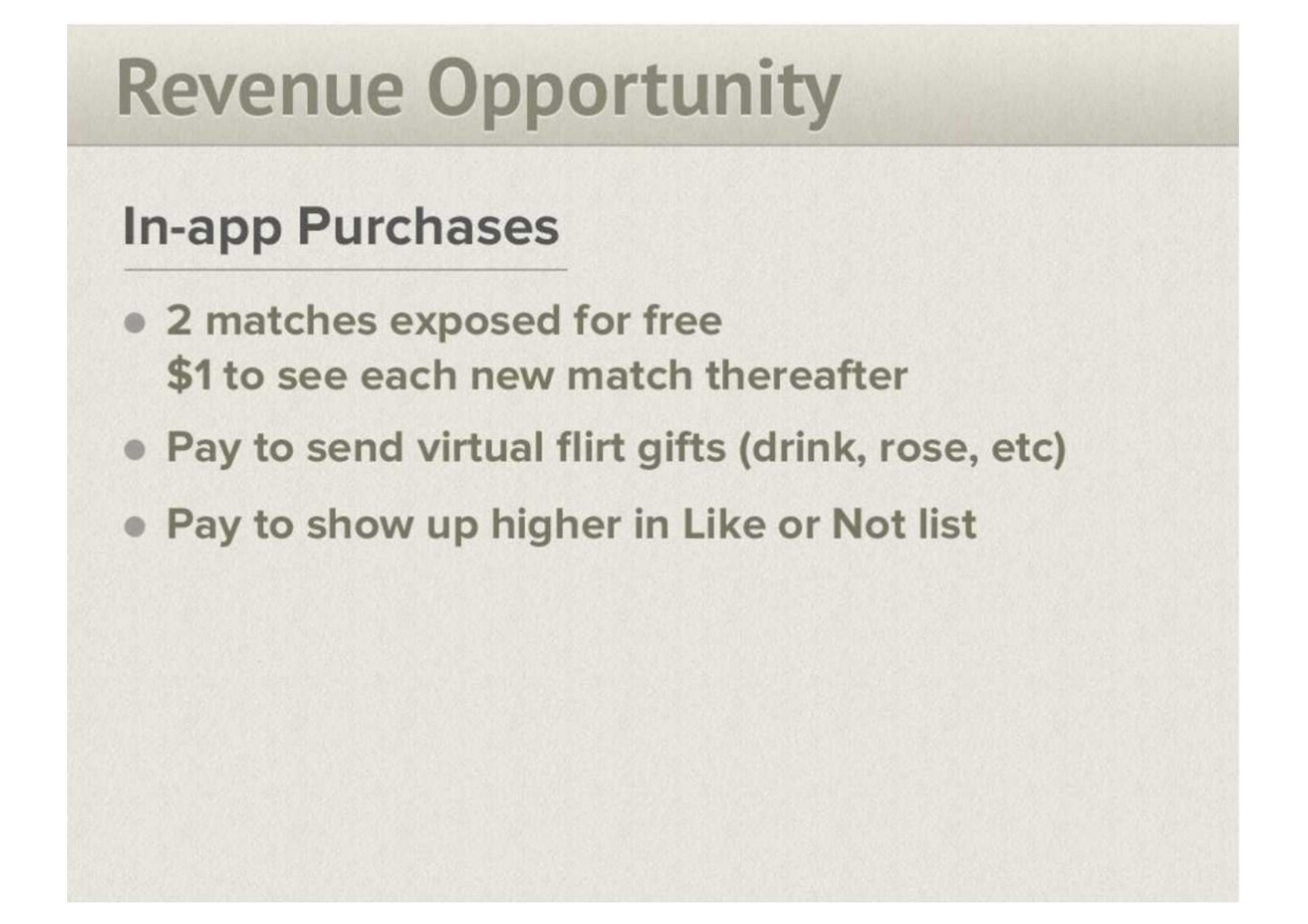
In-app purchases: two free revealed matches, then $1 per new match; paid virtual gifts; pay to rank higher in the Like or Not list.
Why it works
Monetizes curiosity at the match moment, if someone liked you, will you pay a dollar to find out? The model Tinder later scaled with Plus, Gold, and Boost has its DNA here.
Compare similar investor decks
More seed and consumer app presentations in the library.



Your pitch deck, ready before the meeting
Start with your website or idea and see your slides in minutes. Pay only when you download.
Generate a deck